Panama City runs full 5G, but your signal can drop to nothing the moment you reach the San Blas islands or the Darien, so the carrier behind your eSIM matters more than the brand on it.
Jamie Cole
Tech writer · eSIMply.co
13 min readUpdated July, 2026
Three Panama eSIM plans worth a closer look
GigSky
Lowest entry price on our list, plus a full unlimited-data ladder for short city breaks.
$5.09/ 1GB · 7 days
Cheapest 1GB entry plan we found for Panama
Unlimited days from $5.94, handy for a weekend in the capital
Auto-selects the fastest network, no carrier to pick
eSIMply
The only plan here that names Tigo, Panama’s largest mobile network, with 5G and no ID check.
$7.95/ 1GB · 7 days
Names Tigo as the carrier, useful where coverage runs thin
No ID and no SIM kiosk, scan the QR code and go
QR code emailed instantly, installs in under 2 minutes
24/7 support by chat or email if anything goes sideways
Names three Panama carriers, with 5G, the cheapest big buckets and true unlimited.
$9.00/ 1GB · 7 days
Names +Movil, Digicel and Tigo, with 5G listed
20GB / 30 days at $27.00, the best big-bucket price here
Unlimited for 10 days at $49 for a data-heavy trip
Picking a data plan for Panama looks simple until you notice most providers will not tell you which network you are actually buying. This guide ranks seven travel eSIMs on price, plan range and the carrier each one actually names. You will also find what to do before you fly and where your signal will hold up once you land.
02 Full comparison
Panama eSIM plans compared, side by side
Panama runs four main mobile networks: Tigo (the former Cable & Wireless and +Movil, now part of Millicom), Claro, Digicel and Mas Movil. The table sorts by entry price, then flags which providers actually name a Panama carrier and which only promise a “best local network”. Prices come straight from each provider’s public Panama product page.
2026 Panama eSIM comparison
7 providers · July 2026
Provider
Plans
From
Network
eSIMply
Names Tigo, Panama’s largest network, with 5G. Capped entry at $7.95, up to 48% off RRP, no ID required.
Up to 48% off
1GB to 5GB · 7-30d
$7.951GB / 7d
Tigo
GigSky
Cheapest entry here and a full unlimited ladder. Auto-selects the fastest network rather than naming one.
1GB to Unltd · 1-30d
$5.091GB / 7d
Network not disclosed
Roamless
30-day plans only, with a free trial allowance. Low 5GB / 30 days at $27.95, carrier not named.
250MB to 10GB · 30d
$6.951GB / 30d
Network not disclosed
Saily
NordVPN-backed, 5G listed. Clean capped range. 10GB / 30 days at $39.99, carrier not named.
1GB to 10GB · 7-30d
$7.991GB / 7d
Network not disclosed
Nomad
Names three Panama carriers, with 5G. Cheapest big buckets here and the only true unlimited tiers.
1GB to Unltd · 5-45d
$9.001GB / 7d
+Movil / Digicel / Tigo
Airalo
Widest plan range, 10 plans. Names Tigo (+Movil) as the carrier. 20GB / 30 days for $45.
1GB to 20GB · 3-30d
$9.501GB / 3d
Tigo (+Movil)
aloSIM
Names Claro and Tigo, on LTE. Clean flat-rate range. 5GB / 30 days at $30.
1GB to 20GB · 7-30d
$9.501GB / 7d
Claro / Tigo
Prices are from each provider’s public Panama product page, shown in USD.
A local prepaid SIM from Tigo, Mas Movil, Claro or Digicel turns your handset into a local prepaid mobile phone, cheap once you have one, and it gives you a Panama telephone number for calls and texts. The catch is getting it. You buy at an airport kiosk or a carrier shop, show your passport, and often wait while staff register the SIM to the local computer network, all in Spanish.
A travel eSIM skips that entirely. You buy online before you fly, the QR code lands in your inbox, and you install it in a couple of minutes so you connect the moment you clear Tocumen. Entry plans start at $5.09 for 1GB, and you never touch a SIM tray or hand over ID at a counter.
The trade-off is that a data-only eSIM gives you no Panama number, so calls and SMS stay on your home line. For most visitors that is fine, since WhatsApp handles messaging and most tour and hotel contact anyway. If you genuinely need a local number for a long stay, a local SIM still wins; for a week or two of data, the eSIM is the simpler buy.
04 Rankings
The seven Panama eSIM providers, ranked
Special offer: Up to 48% off retail price on all Panama plans Get it here
eSIMply
The only plan here that names Tigo, Panama’s largest mobile network, on a 5G connection with no ID check to activate.
4.7/5
★★★★★
Editor’s rating
Range
1GB to 5GB
Validity
7-30 days
Network
Tigo (5G)
Type
Data only
eSIMply is the one provider on this list that names its Panama carrier outright: Tigo, the former Cable & Wireless and +Movil network now run by Millicom, with 5G listed. Tigo is among the country’s largest operators, so you know exactly which network you are buying before you pay rather than trusting a vague “best local network” promise.
The 1GB / 7-day plan is $7.95, and the capped range runs to 3GB / 30 days at $19.95 and 5GB / 30 days at $31.95. For a week in Panama City and along the Canal navigating by Google Maps and messaging on WhatsApp, the 3GB plan is a comfortable fit with room to spare.
Panama plans
Plan
Validity
Price
Savings
1 GB
7 days
$7.95
Save $7.35 (48%)
2 GB
15 days
$15.95
Save $9.25 (37%)
3 GB Best value
30 days
$19.95
Save $14.25 (42%)
5 GB
30 days
$31.95
Save $22.05 (41%)
Installation
Purchase online, receive a QR code by email, and scan it in your phone’s settings before you fly. The eSIM installs in under 2 minutes. Set it as your active data line and switch data roaming on, and it connects to Tigo when you land at Tocumen.
What works
Names Tigo as the carrier, the only plan here to tell you the network up front, with 5G listed
Capped entry pricing from $7.95 for 1GB, with up to 48% off the retail price
No ID and no SIM registration to activate, which skips the passport check at a carrier shop
QR code emailed instantly after ordering, installs in under 2 minutes, with 24/7 chat support
Optional companion app adds calling and texting credit if you need a number while abroad
Trade-offs
Data-only plan, so no Panama phone number and no inbound calls or SMS on the eSIM line
Tops out at 5GB, so a heavy-data month needs a top-up or a bigger-bucket provider
Get eSIM For Panama →Prices shown in USD. Plans activate on first data connection in Panama.
Airalo
Widest plan range, on Tigo, and the eSIM brand most travellers reach for first.
4.5/5
★★★★★
Editor’s rating
Range
1GB to 20GB
Validity
3-30 days
Network
Tigo (+Movil)
Type
Data only
Airalo is the most widely used travel eSIM brand globally, and its Panama plan names the carrier as +Movil, the legacy Cable & Wireless brand that is now part of Tigo. That puts it in the small group here that tells you the underlying network rather than leaving it vague.
The plan range is the widest on this list, with three validity tiers across most data buckets, so you can match a 3-day stopover or a 30-day stay. The 10GB / 30 days at $35.00 and 20GB / 30 days at $45.00 are the clearest mid-range buys for a longer trip with heavier use.
Panama plans
Plan
Validity
Price
1 GB
3 days
$9.50
3 GB
7 days
$18.00
5 GB
30 days
$30.00
10 GB Best value
30 days
$35.00
20 GB
30 days
$45.00
Installation
The Airalo app guides you through installation step by step on iOS and Android. QR code install takes under two minutes. The app shows remaining data usage in real time, which helps when managing a capped plan across a multi-week stay.
What works
Widest plan range on our Panama list, with three validity tiers to match trip length
Names +Movil (now Tigo) as the carrier, so you know the network before buying
Mature app with reliable QR install and live usage tracking, and the most-cited eSIM brand on forums
Trade-offs
Entry 1GB / 3 days at $9.50 is pricier than GigSky, Roamless and Saily at the same tier
Short 3-day and 7-day validity on the smaller plans suits stopovers more than slow travel
Saily
NordVPN-backed, with a clean app and 5G listed, though it never names the Panama carrier.
4.3/5
★★★★★
Editor’s rating
Range
1GB to 10GB
Validity
7-30 days
Network
Not disclosed (5G)
Type
Data only
Saily is built by the NordVPN team, which lends a security-brand trust signal that travellers who use a lot of public Wi-Fi tend to value. The 1GB / 7-day plan at $7.99 sits close to eSIMply on entry price, and the lineup runs four clean capped plans up to 10GB / 30 days at $39.99.
Saily does not name its Panama carrier on the product page, saying only that it connects to the country’s best networks, though it does list 5G as available depending on the local network. The app shows live data balance on iOS and Android.
Panama plans
Plan
Validity
Price
1 GB Best value
7 days
$7.99
3 GB
30 days
$19.99
5 GB
30 days
$29.99
10 GB
30 days
$39.99
Installation
QR code install via the Saily app or directly from email. The app manages your eSIMs and tracks real-time usage. Compatible with all eSIM-capable iPhones and Android devices.
What works
Competitive 1GB / 7 days entry at $7.99, in line with eSIMply
NordVPN backing gives a security trust signal for travellers on public Wi-Fi
5G listed for Panama, with a clean app and live data monitoring
Trade-offs
Carrier not disclosed for Panama, so you cannot verify which network you connect to before buying
Tops out at 10GB, so a heavy-data month needs a bigger-bucket provider like Nomad or Airalo
Nomad
Names three Panama carriers, with 5G, plus the cheapest big buckets and the only true unlimited tiers.
4.4/5
★★★★★
Editor’s rating
Range
1GB to Unlimited
Validity
5-45 days
Network
+Movil / Digicel / Tigo (5G)
Type
Data only
Nomad is the most transparent provider here on coverage, naming all three of +Movil, Digicel and Tigo as its Panama networks with 5G listed. Spanning multiple carriers gives it the best shot at holding a signal as you move between the city, the coast and the highlands.
Nomad also has the cheapest big buckets on this list, with 10GB / 30 days at $19.00 and 20GB / 30 days at $27.00, well below Airalo and Saily. It is the only provider offering true unlimited tiers, at $29 for 5 days and $49 for 10 days, which suits a data-heavy trip. The Nomad app shows live data balance on iOS and Android.
Panama plans
Plan
Validity
Price
1 GB
7 days
$9.00
5 GB
30 days
$17.00
20 GB Best value
30 days
$27.00
Unlimited
5 days
$29.00
Unlimited
10 days
$49.00
Installation
Standard QR code install. The Nomad app shows your live data balance and remaining days. Nomad does not auto-renew, so set a calendar reminder if your Panama stay is likely to run past the plan window.
What works
Names +Movil, Digicel and Tigo, with 5G, the widest carrier disclosure on our list
Cheapest big buckets here, 10GB at $19 and 20GB at $27, below Airalo and Saily
Only provider with true unlimited tiers, useful for a data-heavy week
Trade-offs
Entry 1GB / 7 days at $9.00 is among the pricier small plans here
No auto-renew, so manual top-up is needed if your stay extends
aloSIM
Names Claro and Tigo, on LTE, across a clean flat-rate plan range up to 20GB.
4.1/5
★★★★★
Editor’s rating
Range
1GB to 20GB
Validity
7-30 days
Network
Claro / Tigo
Type
Data only (LTE)
aloSIM names both Claro and Tigo on its Panama product page, putting it alongside eSIMply, Airalo and Nomad in the group that tells you which network you are actually on. It lists an LTE-equivalent connection rather than confirmed 5G. The plan range is six flat-rate capped options.
The 5GB / 30-day plan at $30.00 is mid-market, and the range tops out at 20GB / 30 days at $45.00, so it can handle a heavier month if you want one carrier set. Naming Claro and Tigo gives you two of Panama’s larger networks to fall back on. The aloSIM app on iOS and Android shows live data balance.
Panama plans
Plan
Validity
Price
1 GB
7 days
$9.50
2 GB
7 days
$17.50
3 GB Best value
30 days
$20.00
5 GB
30 days
$30.00
10 GB
30 days
$35.00
20 GB
30 days
$45.00
What works
Names Claro and Tigo, two of Panama’s larger networks, so you know the carrier before buying
Clean flat-rate pricing across the range, easy to budget
Full ladder up to 20GB / 30 days for a heavier month on one carrier
Trade-offs
Entry 1GB / 7 days at $9.50 is among the pricier small plans here
LTE rather than confirmed 5G, so peak speeds trail the 5G-listed providers
Roamless
Low 30-day pricing from $6.95 and a small free trial allowance, though it never names the carrier.
4.0/5
★★★★★
Editor’s rating
Range
250MB to 10GB
Validity
30 days
Network
Not disclosed
Type
Data only
Roamless lists some of the lowest 30-day Panama prices. The 1GB plan at $6.95 is a competitive entry, and the 5GB / 30-day plan at $27.95 sits mid-pack on that data tier. It also includes a small free trial allowance of 250MB, handy for testing the connection before you commit.
Every Roamless plan runs 30 days, so it leans toward a slower trip rather than a quick stopover. It does not name its Panama carrier on the product page, so you cannot confirm which network you connect to before buying.
Panama plans
Plan
Validity
Price
250 MB
30 days
Free
1 GB
30 days
$6.95
3 GB Best value
30 days
$17.95
5 GB
30 days
$27.95
10 GB
30 days
$39.95
What works
Low entry pricing, with 1GB / 30 days at $6.95, the second-cheapest 1GB here
Includes a 250MB free trial allowance to test before you buy
Simple 30-day range with no confusing validity tiers
Trade-offs
30-day validity only, so nothing tailored to a quick weekend
Carrier not disclosed, so you cannot verify which Panama network you connect to
GigSky
Cheapest 1GB entry here plus a full unlimited ladder, but it never names the carrier.
4.0/5
★★★★★
Editor’s rating
Range
1GB to Unlimited
Validity
1-30 days
Network
Not disclosed
Type
Data only
GigSky has the cheapest 1GB entry on this list, at $5.09 for 7 days, and the deepest unlimited ladder, running from $5.94 for a single day up to $67.49 for 30 days. Rather than naming a carrier, it says it automatically connects you to the fastest network available, which can be handy if you would rather not pick one.
The unlimited day passes are the real draw for a short city break where you do not want to ration data. The capped plans, like 5GB / 30 days at $23.19, are mid-pack. GigSky does not name a specific Panama carrier on its product page.
Panama plans
Plan
Validity
Price
1 GB Best value
7 days
$5.09
5 GB
30 days
$23.19
10 GB
30 days
$41.24
Unlimited
3 days
$16.99
Unlimited
7 days
$30.39
What works
Cheapest 1GB entry on our list at $5.09, plus the deepest unlimited ladder
Unlimited day passes from $5.94 suit a short, data-heavy city break
Auto-selects the fastest available network, with broad global device support
Trade-offs
Carrier not disclosed for Panama, so you cannot verify the network before buying
Longer unlimited tiers get expensive fast, up to $67.49 for 30 days
07 Country essentials
Before you go to Panama.
Panama is easy to get around once you know two things, and both catch first-timers off guard. The first is connectivity: the city and Canal run on strong 4G, but coverage falls away to nothing in San Blas, the highlands and the Darien. The second is cash, which you need far more of than a card-friendly capital suggests. Sort these before you land.
The eSIM gotcha
One eSIM does not cover all of Panama, and no plan reaches San Blas or the Darien.
The biggest thing eSIM users get wrong is assuming a data plan keeps them online everywhere. It does not. You lose signal entirely in the San Blas (Guna Yala) islands and the Darien, while Panama City and the Canal corridor stay on strong 4G.
No eSIM fixes those dead zones, whichever carrier you pick. The fix is to download offline maps before you leave the capital and draw the cash you will need, because the islands have no ATMs either.
The Darien and Mosquito Gulf are connectivity and safety dead zones.
Panama’s far east and a stretch of its Caribbean coast are genuine blank spots on the map. The US State Department rates parts of the Darien Region and the “Mosquito Gulf” at Level 4: Do Not Travel, noting the Darien has few roads and is accessed only by river or on foot, with extremely limited emergency services.
San Blas is cash-only with no ATMs on the islands.
The Guna Yala islands are the trip’s biggest budgeting trap. Local operators are blunt that the Guna Yala territory is a cash-only economy with no card machines at the border and no ATMs on the islands, and that arriving with only a Visa card can mean you are not even allowed in.
Yappy is the local payment app, but it is bank-gated.
Panama’s everyday mobile-payment habit runs on Yappy, a service built by Banco General. The app is offered through a roster of Panamanian banks led by Banco General, and that is the catch for visitors: signing up generally requires a local bank account.
So most short-stay travellers cannot actually use Yappy, even though “Yappy aqui” stickers are everywhere in shops, taxis and market stalls. Plan to pay those vendors in cash or by card instead.
Getting around and paying for things.
i
Getting around
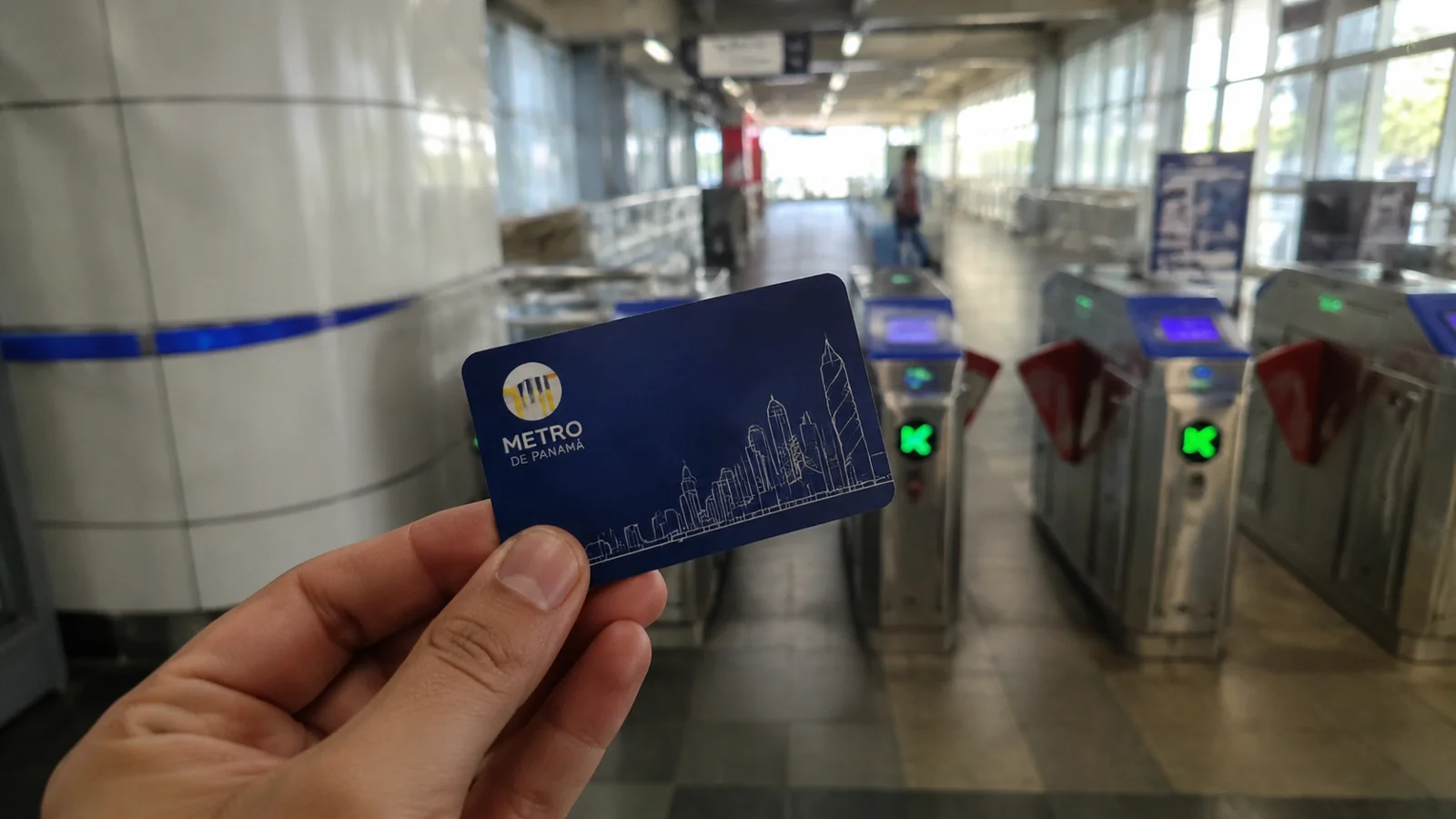
The Metro and MetroBus need a physical Metro card, since buses take no cash or contactless. Uber, InDrive and Cabify all work in the city and beat the unmetered yellow taxis. Download Google Maps offline before you set out.
$
Paying for things
Cards work well in Panama City, but cash rules the moment you leave it. ATMs marked “Sistema Clave” dispense dollars for a flat fee of around $5. Carry enough cash before heading to islands and interior towns.
On money, the good news is that you already carry the local currency if you are American. Panama uses the US dollar as legal tender and has no balboa bills in circulation. UK, EU and AU travellers will exchange or withdraw dollars rather than a separate local note, and the XE app is handy for checking the rate first.
Cards work well in Panama City but cash rules the moment you leave it. Visa and Mastercard are widely accepted in city restaurants, hotels and malls, while ATMs marked “Sistema Clave” dispense dollars for a flat fee of around $5 per withdrawal with a cap near $500. Beyond the capital, places like Bocas del Toro, Boquete and interior towns are far more cash-friendly than card-friendly.
These are the mobile app downloads Reddit threads and traveller guides consistently say first-time visitors wish they had before flying, not the ones in generic packing lists.
It is normal to tip around 10% in restaurants, bars and cafes, rising to 15-20% for exceptional service. Some places add a service charge to the bill, so check before adding more, and tip in US dollars.
$
Cash vs card
Panama City is card-friendly, but cash takes over everywhere else. Draw dollars at “Sistema Clave” ATMs for a roughly $5 fee, ideally inside a bank, and carry enough before San Blas, Bocas del Toro and interior towns, where cards often do not work.
Where you’ll actually use your eSIM in Panama.
Six places where your mobile data will earn its keep, and where coverage differences between providers actually start to matter:
01 Panama City
Strong, reliable 4G across the metro area and along the Metro rail line, including the Tocumen Airport branch, though data can drop right at the customs-exit doors.
02 Casco Viejo
Solid city coverage in the old town, a tourist hub well served by Panama City’s networks, so your eSIM works as smoothly here as in the modern centre.
03 Colon and the Canal
Strong coverage along the Canal and the main Panama-to-Colon road, the country’s best-connected corridor outside the capital.
04 Bocas del Toro
Workable coverage in town but patchier across the island archipelago, so lean on cash and offline maps, and check for any protest-related disruption first.
05 Boquete
Usable in town, but the UK Foreign Office warns mobile coverage is unreliable on the hiking trails around Boquete and Chiriqui province, so carry offline maps.
06 San Blas (Guna Yala)
Effectively no usable mobile data on the islands, paired with a cash-only economy and no ATMs, making it the single worst spot in the country for connectivity.
08 Decision guide
How to choose the best eSIM for Panama
Picking a Panama plan comes down to three questions: how much data you will burn, whether you care which carrier you are on, and where in the country you are heading. For most travelers the trip is city-and-Canal based, where any provider here works, so the choice is really about price and disclosure. As long as you have an eSIM-capable smartphone, every option below will keep you connected.
If you want a refresher on plan sizing and validity windows in general, our guide to choosing an eSIM plan covers the basics. The questions below are the ones that matter specifically for Panama.
How much data do you actually need in Panama?
A typical city trip leans on Google Maps, WhatsApp, Uber and a bit of social media, which burns roughly 300 to 500MB a day. For a week, a 3GB or 5GB plan is a comfortable fit, like eSIMply’s 3GB / 30 days at $19.95 or GigSky’s 5GB / 30 days at $23.19.
If you stream, tether a laptop or stay two weeks or more, size up. Nomad’s 20GB / 30 days at $27.00 is the cheapest big bucket here, and its unlimited 10-day pass at $49 suits a genuinely heavy week.
Does it matter which Panama network your eSIM uses?
It can, because coverage outside the city is uneven. Only some providers name a carrier: eSIMply lists Tigo, Airalo lists +Movil (now Tigo), Nomad lists +Movil, Digicel and Tigo, and aloSIM lists Claro and Tigo. Saily, Roamless and GigSky do not name a Panama carrier.
For a city-only trip, a non-disclosed plan is fine. For the highlands or the coast, a named multi-carrier plan like Nomad’s gives you the best odds of holding a signal where networks thin out.
Are you staying in the city or heading to the islands and highlands?
If you are city-and-Canal based, buy on price and pick any provider here. The networks are strong and consistent across Panama City, Casco Viejo and the Canal corridor.
If San Blas, Bocas del Toro or Boquete are on the itinerary, accept that no eSIM covers the islands or the remote trails. Download offline maps, carry cash, and treat data as a city tool rather than a guarantee.
Is a single-country plan better than a regional one?
For a Panama-only trip, a single-country plan is almost always cheaper and simpler than a Central America or Americas regional bundle. The country plans here start at $5.09, well below most regional rates.
A regional plan only makes sense if you are crossing into Costa Rica or beyond on the same trip. If Panama is the whole journey, buy the country plan.
i
Quick tip
Install the eSIM before you fly, set it as your default data line, and switch data roaming on for the eSIM so it connects at Tocumen. Download offline maps of San Blas, Boquete and Bocas before you leave the city, since signal drops to nothing in those spots.
09 Frequently asked questions
Panama eSIM questions, answered
Most questions from a Panama traveller come down to coverage and value: which network you are on, how much data a trip needs, and whether buying before you fly is worth it. The answers below pull from each provider’s own product pages and from what travellers report on the ground.
If your question is about a specific dead zone or payment quirk, the “Before you go” section above covers San Blas, the Darien and the cash-only reality in more detail. For anything not answered here, every provider lists its full policy, including any refund terms, on its own site.
Not strictly, but a prepaid eSIM is the easiest way to get high-speed internet in Panama. It beats home-network roaming fees on price and gets your mobile phone online the moment you land at Tocumen, which matters because you will want Uber and Google Maps working straight away.
The alternative, a physical SIM card from a local cellular provider, means queueing at an airport kiosk and showing your passport while staff register it. An eSIM skips that whole process, so for most visitors it is the simpler choice.
No, and neither will any other plan. The San Blas (Guna Yala) islands and the Darien are mobile dead zones, so coverage drops to nothing regardless of which carrier your eSIM uses, whether that is Tigo, Claro or Digicel.
There is no plan-side fix. Download offline maps before you leave Panama City, draw cash for the islands, since there are no ATMs there, and treat the city and Canal corridor as where your data actually earns its keep.
Yes, and you should. Buy from any provider here, like eSIMply, Airalo, Nomad or GigSky, and you arrive connected with no roaming charges and no in-store paperwork at the airport.
The flow is simple: order online, get a QR code by email, then scan it in your phone’s settings before you fly. First check your phone is eSIM-compatible (most iPhones from the XS on and recent Android flagships are), set the eSIM as your data line, and switch data roaming on so it connects on landing.
It depends on how much data you need. The cheapest 1GB entry is GigSky at $5.09, while the cheapest large bucket is Nomad’s 20GB / 30 days at $27.00. Both leave the carrier undisclosed (GigSky) or spread across three (Nomad).
If you want to know the network up front, eSIMply’s entry sits at $7.95 on a named Tigo connection with 5G, which is competitive once you factor in the disclosure and the no-ID activation. Value is not just the headline price, it is also whether you can verify the network you are buying.
Panama has four main mobile networks: Tigo (the former Cable & Wireless and +Movil, now part of Millicom), Claro, Digicel and Mas Movil, the operator that absorbed the old Movistar network. Tigo and Claro run the strongest infrastructure across Panama City and the Canal corridor.
Of the providers here, eSIMply names Tigo, Airalo names +Movil (Tigo), Nomad names +Movil, Digicel and Tigo, and aloSIM names Claro and Tigo. Saily, Roamless and GigSky do not disclose a specific Panama carrier, so you cannot verify their network before buying. Other global brands like Yesim sell Panama plans too, but most operate as a mobile virtual network operator riding on those same four carriers, so the underlying network is what really matters on your vacation.
A typical week of data in Panama, running Google Maps, WhatsApp, Uber and some social media, uses roughly 2GB to 4GB. A 3GB or 5GB plan covers most trips comfortably, like eSIMply’s 3GB / 30 days at $19.95 or GigSky’s 5GB / 30 days at $23.19, so you can prepay once and forget about it.
Streaming or tethering pushes you higher, so reserve more headroom with Nomad’s 20GB at $27.00 or an unlimited pass if you plan to lean on data hard. Always download offline maps for Boquete, Bocas and San Blas, since coverage there is unreliable or absent whatever your plan size.
For most visitors, yes. An eSIM installs from home, skips the passport check and registration at a carrier shop, and gets you online at Tocumen with entry plans from $5.09. There is no SIM tray to swap and nothing to set up on arrival.
A local SIM still wins on one thing: it gives you a Panama phone number for calls and texts. The neat middle ground is a dual setup, keeping your home SIM in for calls and 2FA while the eSIM handles data, which is what most short-stay travellers do.
No. The travel eSIMs here are data-only, so they do not include a local phone number and carry no cellular telephone calls or SMS on the eSIM line. That is fine for most trips, since apps like WhatsApp cover calls and messaging over data, the main way most people stay connected here anyway.
Keep your home SIM active for regular calls and 2FA codes through dual SIM, with data roaming switched off on that line to avoid international charges, and the eSIM set as your default data. If you do want a number while abroad, eSIMply offers an optional companion app that adds calling and texting credit.
Most often it is a settings issue. Turn data roaming on for the eSIM line, which carries no extra charge on a travel plan, and close any VPN that loops on “Activating”. If it still will not connect, manually select a Panama carrier like Tigo or Claro in your network settings, then contact the provider’s support to request a fix.
One thing no fix can solve: dead zones. If you are showing “No Service” in San Blas, the Darien or on a remote Boquete trail, that is the lack of coverage there, not your eSIM, so plan offline for those spots.
Yes. Tethering and hotspot use are included across the providers in this comparison, so you can share your connection with a laptop or a travel companion’s phone at no additional cost. That makes a single plan handy for a couple or for anyone working remotely on business while travelling.
Just bear in mind that tethering burns data faster than phone browsing, especially if a laptop runs cloud sync or video. If you plan to hotspot regularly, size up to a 10GB or 20GB plan, or one of Nomad’s unlimited data passes.
Our methodology
How we ranked these Panama eSIMs
We work in eSIM technology full-time, so this is not a side-hustle review. eSIMply runs its own eSIM service, and one of the plans here is ours, which we have flagged openly rather than hidden. The ranking still has to stand on the same evidence we apply to every provider.
Every carrier claim in this guide traces to a primary source, namely each provider’s own Panama product page, checked in July 2026.
We verified the underlying network per provider from their own pages: eSIMply names Tigo, Airalo names +Movil (Tigo), Nomad names +Movil, Digicel and Tigo, and aloSIM names Claro and Tigo, while Saily, Roamless and GigSky do not disclose a carrier
For Panama specifically we weighted carrier disclosure most, because coverage is uneven outside the city and a named network is the only way to verify what you are buying
We then compared entry-plan pricing, plan flexibility, validity windows, hotspot support and customer support across all seven providers
Where providers were close, we broke ties on transparency and install experience rather than headline price alone
Jetpac was considered but excluded, as it does not currently offer a Panama plan
We may receive commission from some providers if you buy through our links. This never influences the ranking, and underperforming providers are excluded regardless of any affiliate relationship.
Jamie Cole
Tech content writer · eSIMply.co
Jamie has worked in telecommunications for more than 8 years across mobile, SMS, eSIM, apps, and adjacent technology. He now writes for eSIMply as the tech content writer, analysing the top eSIM providers and breaking down what travellers actually need to know.
While we do our best to ensure accuracy, prices and plan availability are subject to change. Last updated by Jamie Cole.
To provide the best experiences, we use technologies like cookies to store and/or access device information. Consenting to these technologies will allow us to process data such as browsing behavior or unique IDs on this site. Not consenting or withdrawing consent, may adversely affect certain features and functions.
Functional
Always active
The technical storage or access is strictly necessary for the legitimate purpose of enabling the use of a specific service explicitly requested by the subscriber or user, or for the sole purpose of carrying out the transmission of a communication over an electronic communications network.
Preferences
The technical storage or access is necessary for the legitimate purpose of storing preferences that are not requested by the subscriber or user.
Statistics
The technical storage or access that is used exclusively for statistical purposes.The technical storage or access that is used exclusively for anonymous statistical purposes. Without a subpoena, voluntary compliance on the part of your Internet Service Provider, or additional records from a third party, information stored or retrieved for this purpose alone cannot usually be used to identify you.
Marketing
The technical storage or access is required to create user profiles to send advertising, or to track the user on a website or across several websites for similar marketing purposes.