Strong long-stay value with the widest unlimited range.
$20.00/ 20GB · 30 days
Disclosed A1 and Telemach routing, plus the widest unlimited range in our test
Clean app with usage alerts, family sharing and easy top-ups
Multi-carrier routing where supported, for resilient coverage
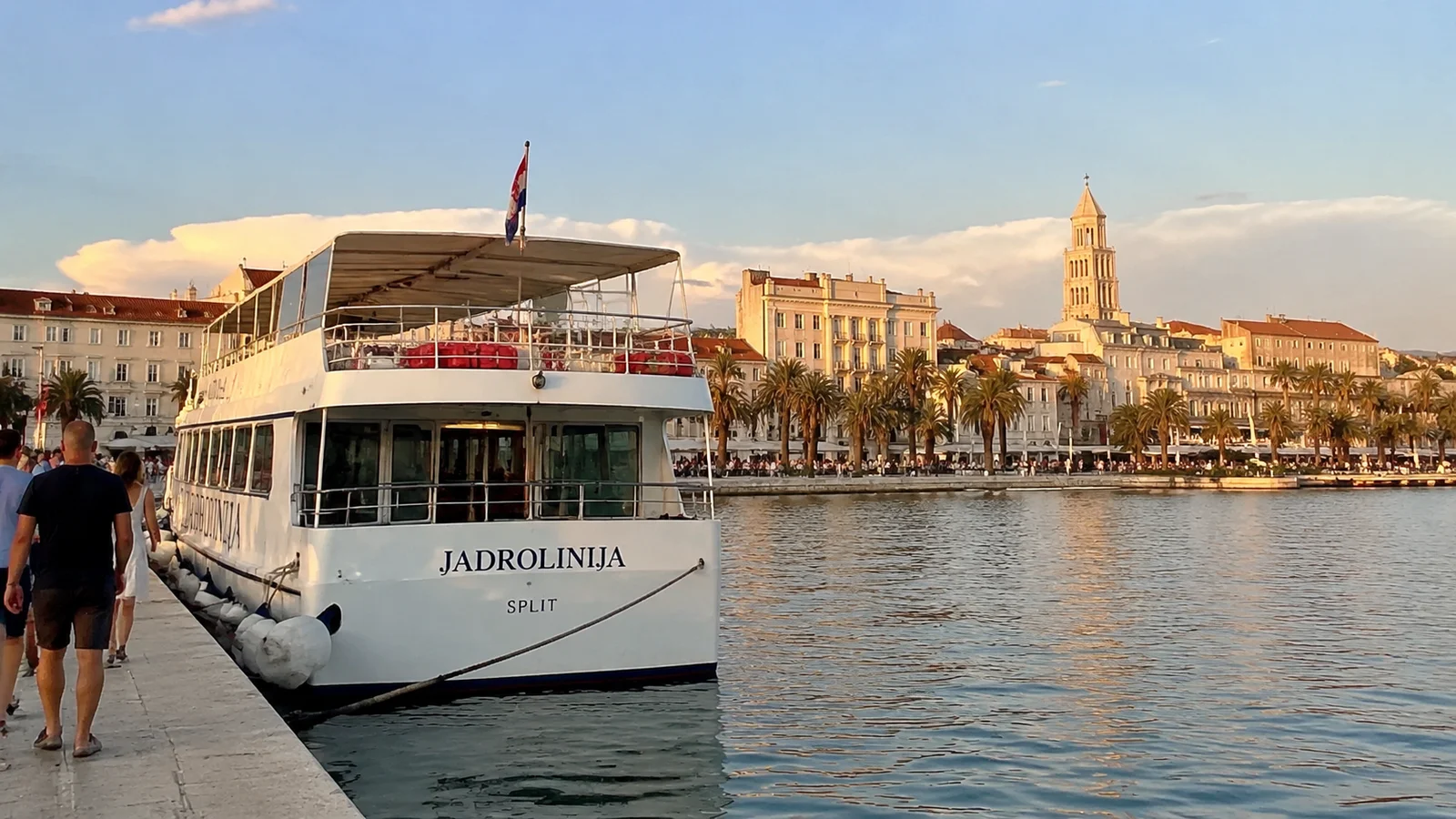
Heading to Croatia and want data the moment you land? This guide ranks eight travel eSIMs for Croatia on price, the Croatian network each one rides, which offer 5G, and where your signal holds up between Zagreb, Split, Dubrovnik, and the Dalmatian islands. Install before you fly and arrive online.
02 Full comparison
All eight Croatia eSIM providers compared, side by side.
All eight providers in one view: the cheapest entry plan, the data range, and the Croatian carrier each one discloses. Croatia runs on Hrvatski Telekom, A1, and Telemach; most plans are sold as a Europe regional or country-only option.
2026 Croatia eSIM comparison
8 providers · 3 networks · pricing checked May 2026
Provider
Plans
From
Network
eSIMply
Cheapest unlimited plans tested. Routes on Telemach. Up to 59% off RRP.
Up to 59% off
1GB to 20GB + Unlimited · 3-30d
$2.951GB / 7d
Telemach
Saily
Cheap 1GB entry plan at $3.99. NordVPN brand with strong trust signal.
1GB to Unlimited · 7-30d
$3.991GB / 7d
Undisclosed
Airalo
Widest plan range we found. 50GB / 30 days for $35.00.
1GB to 50GB · 3-30d
$4.001GB / 3d
Telemach
Nomad
Best unlimited plan range. Routes on A1 and Telemach.
1GB to 50GB + Unlimited · 3-30d
$4.501GB / 7d
A1 · Telemach
Jetpac
$1.00 entry plan is the cheapest taster on the list. Routes on Telemach and A1.
1GB to 40GB + Unlimited · 4-30d
$1.001GB / 4d
Telemach · A1
aloSIM
Reliable mid-range option. 5GB / 30 days for $10.50.
1GB to 20GB · 7-30d
$4.501GB / 7d
Telemach · A1
Roamless
Cheapest 30-day plans across the smaller buckets. 1GB / 30d for $3.95.
1GB to 20GB · 30d only
$3.951GB / 30d
Undisclosed
GigSky
Long-validity plans only. Useful for 90-180 day stays.
Special offer: Up to 59% off retail price on all Croatia plans Get it here
eSIMply
Cheapest unlimited Croatia eSIM, runs on the Telemach network.
4.8/5
★★★★★
Editor’s rating
Range
1GB to 20GB + Unlimited
Validity
3-30 days
Network
Telemach
Type
Data only
eSIMply routes through Telemach, one of Croatia’s three main networks alongside Hrvatski Telekom and A1. The Croatia pricing is the most competitive on our list: $2.95 for 1GB / 7 days, $8.95 for 5GB / 30 days, and $7.95 for unlimited data over 3 days. For a long weekend in Split or Dubrovnik where you’re navigating by Maps, posting to Instagram, and calling home on WhatsApp, the 5GB plan covers a standard trip with room to spare. The unlimited Croatia plans are the cheapest we found, with the 3-day option starting almost $4 below the next provider on the list.
Croatia plans
Plan
Validity
Price
Savings
1 GB
7 days
$2.95
Save $4.25 (59%)
2 GB
15 days
$4.95
Save $5.85 (54%)
3 GB
30 days
$5.95
Save $7.55 (56%)
5 GB Best value
30 days
$8.95
Save $9.95 (53%)
10 GB
30 days
$15.95
Save $14.65 (48%)
20 GB
30 days
$23.95
Save $21.95 (48%)
Unlimited
3 days
$7.95
Save $9.15 (54%)
Unlimited
5 days
$17.95
Save $16.25 (48%)
Unlimited
7 days
$23.95
Save $21.05 (47%)
Unlimited
10 days
$27.95
Save $25.15 (47%)
Unlimited
15 days
$37.95
Save $32.25 (46%)
Unlimited
30 days
$57.95
Save $48.25 (45%)
Installation
Buy online, get the QR code by email, and scan it into your settings before you fly; under two minutes. Set it as the active data line before boarding and it connects to Telemach the moment you touch down at Zagreb, Split, Dubrovnik, or Pula. No registration, no passport.
What works
Cheapest unlimited Croatia eSIM on our list, from $7.95 for 3 days on Telemach
Auto-connects to the local network the moment you land, no airport queue
No KYC, no ID required, just buy and install
QR code emailed instantly after ordering, install in under 2 minutes
No hidden fees and 24/7 support by chat or email
Trade-offs
No auto-renew on plans, set a reminder if you’re extending a long stay
Data-only plan — no inbound voice calls or SMS on the eSIM line, keep your home SIM for voice
Get eSIM For Croatia →Prices shown in USD. Plans activate on first connection to the Telemach network in Croatia.
Airalo
Widest plan range, capped data only, routes on Telemach.
4.5/5
★★★★★
Editor’s rating
Range
1GB to 50GB
Validity
3-30 days
Network
Telemach
Type
Data only
Airalo is the most-used travel eSIM provider globally, and their Croatia plans cover an unusually wide spread, twelve options from 1GB / 3 days at $4.00 right up to 50GB / 30 days at $35.00. Airalo’s product page names Telemach as the local partner, the same primary network that powers eSIMply. The 50GB / 30-day plan is the best large-bucket option for travellers spending three or four weeks across Croatia plus a side trip to Slovenia or Italy. The trade-off: no unlimited data plan for Croatia, so heavy streamers need to budget against a fixed cap.
Croatia plans
Plan
Validity
Price
1 GB
3 days
$4.00
3 GB
7 days
$7.50
5 GB
7 days
$9.50
10 GB
30 days
$17.00
20 GB Best value
30 days
$25.50
50 GB
30 days
$35.00
Installation
The Airalo app guides you through the install process step by step. Available on iOS and Android. QR code install takes under two minutes. Airalo’s app also lets you check your remaining data usage in real time, which is more useful than it sounds mid-trip.
What works
Widest plan range of any provider on our list, 12 options from 1GB to 50GB
50GB / 30 days at $35.00 is the best large-bucket price for month-long Croatia stays
Trade-offs
No unlimited data plan option for Croatia
1GB entry plan at $4.00 is more expensive than eSIMply, Saily and Roamless
Saily
Cheap entry plan from NordVPN’s team, network not publicly disclosed.
4.3/5
★★★★★
Editor’s rating
Range
1GB to Unlimited
Validity
7-30 days
Network
Not disclosed
Type
Data only
Saily is made by the team behind NordVPN, which gives it a trust signal that newer eSIM brands lack. For Croatia, their cheapest plan is 1GB / 7 days at $3.99, just above eSIMply’s $2.95 entry. The plan range is narrower than Airalo (only six options) but covers the main brackets travellers want, including a 10GB / 30 days plan at $17.99 and a 15-day unlimited option. Saily’s product page describes “Croatia’s best networks” without naming a specific carrier, so we can’t tell you in advance whether you’ll connect to Hrvatski Telekom, A1 or Telemach on arrival.
Croatia plans
Plan
Validity
Price
1 GB
7 days
$3.99
3 GB
30 days
$7.99
5 GB
30 days
$10.99
10 GB Best value
30 days
$17.99
20 GB
30 days
$27.99
Unlimited
15 days
$48.99
Installation
QR code install via the Saily app or email. The app shows data usage in real time. Compatible with eSIM-capable iPhones and Android phones.
What works
Trusted brand backed by the NordVPN team
Clean app with real-time data usage monitoring
Trade-offs
Croatia carrier partner not publicly disclosed
Unlimited plan at $48.99 / 15 days is more than double eSIMply’s 7-day unlimited at $23.95
Nomad
Widest unlimited range for Croatia, routes across A1 and Telemach.
4.4/5
★★★★★
Editor’s rating
Range
1GB to 50GB + Unlimited
Validity
3-30 days
Network
A1 / Telemach
Type
Data only
Nomad’s product page is one of the few that explicitly names A1 and Telemach as its Croatia routing partners, which makes it a reasonable backup pick if Telemach coverage feels patchy in Istria or the islands. The standout for longer stays is the 20GB / 30 days at $20.00, undercutting Airalo’s 20GB plan and most rivals. For travellers who genuinely want unlimited data, Nomad runs the widest range in our comparison, four windows from $11 / 3 days up to $31 / 10 days. The Australian-built Nomad app shows real-time usage, useful when you’re managing a month of mobile data remotely.
Croatia plans
Plan
Validity
Price
5 GB
30 days
$12.50
10 GB
30 days
$16.00
20 GB Best value
30 days
$20.00
Unlimited
3 days
$11.00
Unlimited
5 days
$17.00
Unlimited
7 days
$23.00
Unlimited
10 days
$31.00
Installation
Standard QR code install. The Nomad app (iOS and Android) shows your live data balance and remaining days. If you’re on a 30-day plan and approaching the end, the app notifies you. Nomad does not auto-renew, so set a calendar reminder before your plan expires.
!
Worth knowing
Nomad doesn’t auto-renew. If your stay runs longer than your plan, you’ll need to purchase a fresh plan manually. The app makes this easy, but it’s worth knowing in advance.
What works
20GB / 30 days at $20.00 is one of the best capped-plan deals for month-long stays
Disclosed A1 and Telemach routing, plus the widest unlimited range in our test
Trade-offs
No 14-day or 30-day unlimited windows for Croatia
50GB / 30 days at $45 is poor value next to Airalo’s 50GB at $35
Jetpac
Cheapest entry plan on the list, with an unlimited 10-day option.
4.2/5
★★★★★
Editor’s rating
Range
1GB to 40GB + Unlimited
Validity
4-30 days
Network
Telemach / A1
Type
Data only
Jetpac’s $1.00 / 1GB / 4-day plan is the cheapest taster on our entire list, useful if you want to test a Croatia eSIM before committing to a longer plan. Their product page lists Tele2 (now Telemach) and VIP-NET (now A1) as the available networks, which means Jetpac is the only provider in our comparison that gives you fallback across two of Croatia’s three carriers. The 30GB / 30-day plan at $29.99 is genuinely competitive, undercutting Airalo’s 20GB plan, and the unlimited 10-day option at $33.99 sits between Nomad and the rest.
Croatia plans
Plan
Validity
Price
1 GB Cheapest taster
4 days
$1.00
3 GB
7 days
$7.00
5 GB
30 days
$10.00
10 GB
30 days
$16.00
15 GB
30 days
$19.99
30 GB
30 days
$29.99
Unlimited
10 days
$33.99
What works
$1.00 entry plan is by far the cheapest taster on our list
Only provider that publicly lists fallback across both Telemach and A1
Trade-offs
20GB / 30-day plan at $45 is a strange pricing gap, more expensive than the 30GB plan
Brand recognition is lower than Airalo and Saily, so support reach is narrower
aloSIM
Capped plans across Telemach and A1, simple flat-rate pricing.
4.1/5
★★★★★
Editor’s rating
Range
1GB to 20GB
Validity
7-30 days
Network
Telemach / A1
Type
Data only
aloSIM offers a straightforward Croatia plan range with no unlimited option but consistent capped buckets. Their product page names Telé 2 Croatia and VIPnet d.o.o. as the supported networks, which today operate as Telemach and A1 respectively after both rebrands. The 5GB / 30-day plan at $10.50 matches what most travellers actually need for a two-week Croatia trip with mixed Wi-Fi usage. The interface is clean and the install process is fast.
Croatia plans
Plan
Validity
Price
1 GB
7 days
$4.50
3 GB
30 days
$8.00
5 GB Best value
30 days
$10.50
10 GB
30 days
$17.00
20 GB
30 days
$25.50
What works
Disclosed Telemach and A1 routing, the only provider on our list with both networks named
Simple flat-rate pricing across every plan tier
Trade-offs
No unlimited option, so heavy streamers need to plan around a 20GB cap
Smaller plans (1GB, 3GB) are pricier than eSIMply or Saily on the same tier
Roamless
Cheap 30-day capped plans, network not publicly disclosed.
4.0/5
★★★★★
Editor’s rating
Range
1GB to 20GB
Validity
30 days only
Network
Not disclosed
Type
Data only
Roamless prices its Croatia plans aggressively across the board: 1GB / 30 days for $3.95, 5GB / 30 days for $9.95, 10GB / 30 days for $16.95. These match or undercut eSIMply at the smaller-data tiers. Reddit travellers report using Roamless successfully across Dubrovnik, Zadar, Hvar, Brač and Plitvice, with 5GB lasting 11 days of typical tourist use. The trade-off: every Roamless plan is 30 days, so there’s no short-trip option, and the product page doesn’t name the underlying Croatian carrier.
Croatia plans
Plan
Validity
Price
1 GB
30 days
$3.95
2 GB
30 days
$5.95
3 GB
30 days
$7.45
5 GB
30 days
$9.95
10 GB Best value
30 days
$16.95
20 GB
30 days
$24.95
What works
1GB / 30 days at $3.95 is the cheapest entry plan on our list outside Jetpac’s $1 taster
Flat 30-day validity is enough buffer for most longer Croatia trips
Trade-offs
No short-validity plans, pointless for trips under two weeks
Croatia carrier partner not publicly disclosed
GigSky
Long-validity plans up to 180 days, network not publicly disclosed.
3.6/5
★★★★★
Editor’s rating
Range
1GB to 100GB
Validity
7-180 days
Network
Not disclosed
Type
Data only
GigSky is the most expensive provider in our Croatia test for small plans, 5GB / 30 days runs $14.02 and 10GB jumps to $21.67. The one situation where GigSky makes sense is for travellers who genuinely need a 90-day or 180-day validity window without rebuying. Their 100GB / 180-day plan at $87.97 sits in a category no other provider in our list serves, useful for anyone splitting a long European summer between Croatia and the wider Adriatic. For everyone else, the pricing on the smaller plans makes GigSky hard to recommend.
Croatia plans
Plan
Validity
Price
1 GB
7 days
$4.99
3 GB
15 days
$9.34
5 GB
30 days
$14.02
10 GB
30 days
$21.67
50 GB Best value
90 days
$58.64
100 GB
180 days
$87.97
What works
Only provider on our list offering 90-day and 180-day validity windows
100GB / 180 days at $87.97 covers a long European summer without rebuying
Trade-offs
By far the most expensive small and medium plans on our list
No unlimited plan option for Croatia
07 Country essentials
Before you go to Croatia.
Croatia is one of the easiest countries in the EU to navigate with a phone, with universal 5G across the mainland and the main coast on Hrvatski Telekom, A1 and Telemach. A few country-specific quirks will still catch you off guard if you haven’t done this trip before, the currency switched to euros only in 2023, the islands have real coverage gaps, and the no-car zones in Dubrovnik come with eye-watering fines. These are the things to settle before you fly.
The eSIM gotcha
Croatian islands and canyons have real dead zones.
Travellers assume “EU country = blanket coverage” and don’t download offline maps before crossing to Vis, Lastovo or hiking the Velebit and Plitvice deep canyons, that’s where signal vanishes. Cities and the main coast are covered with universal 5G, but ferry crossings drop mid-channel and the smaller islands have real dead zones where your eSIM goes dark for hours.
The kuna is gone, Croatia adopted the euro on 1 January 2023
Schengen membership means no border stamps from EU neighbours
On the same day Croatia switched currency, it also fully joined the Schengen area, removing land-border checks with Slovenia and Hungary. If you’re road-tripping in from Italy, Slovenia or Austria you won’t get a passport stamp, useful to know if you’re tracking days for the 90/180 Schengen rule, because hours spent in Croatia now count against the same allowance as France or Germany.
Dubrovnik old town is a strict no-car zone with €2,000 fines
Bolt and Uber both work in Zagreb, Split, Dubrovnik, Zadar and Rijeka 24/7. Ferries run the Dalmatian coast on Jadrolinija and Krilo Kapetan Luka, book Split-Hvar catamarans online in July and August.
$
Paying for things
Cards work everywhere in Zagreb and the main tourist towns. Keep euros for ferry parking, island konobas, market stalls and tipping. The kuna is gone, only euros are accepted.
Cards work almost everywhere in cities and tourist towns, but cash still has a job. Contactless Visa, Mastercard, Apple Pay and Google Pay are accepted in Zagreb, Split, Dubrovnik, Rovinj and Hvar at restaurants, supermarkets and even tiny old-town bakeries. Where cash matters: small island konobas (family taverns), parking meters in towns like Trogir and Šibenik, market stalls (tržnica) selling cheese and figs, ferry on-board cafés, and tips. Reddit travellers on r/CroatiaTravelTips routinely advise using bank-branded standalone ATMs and avoiding the yellow or blue Euronet machines that charge worse rates.
The currency is the euro, full stop. Croatia replaced the kuna with the euro on 1 January 2023, so any prices you see quoted in HRK or kn online are out of date. If you’re flying in from a non-eurozone country (UK, US, Australia), pulling €100-200 from a bank-owned ATM at the airport on arrival covers tips and small purchases for a few days. Avoid the airport currency-exchange counters, their spreads are punishing.
These are the apps Reddit travellers and the official Croatian operators consistently say first-time visitors wish they’d downloaded before flying. Ferries, intercity buses, Zagreb tram tickets and Plitvice entries all live behind apps these days.
10% of the bill is the standard for good service in restaurants, with 15-20% reserved for exceptional service; in cafés and bars locals just round up to the nearest euro and taxis get rounded up too. Tipping is appreciated but not obligatory, there’s no expectation at fast-food counters or for a beer at a beach bar.
$
Cash vs card
Cards work almost everywhere in cities and tourist towns. Keep small euro notes for island konobas, market stalls (tržnica), ferry parking, parking meters in Trogir and Šibenik, and tips. Avoid the yellow Euronet ATMs at airports, use bank-branded machines for fairer rates.
Where you’ll actually use your eSIM in Croatia.
Five places where your mobile data will earn its keep, and where the coverage differences between providers actually matter:
01 Zagreb
Full 5G across all three networks (HT, A1, Telemach). Hrvatski Telekom won the 2025 Opensignal coverage experience award; Telemach took the 5G coverage crown. Speeds in the centre are reliably gigabit-class on 5G.
02 Split
Strong 5G across the city centre, Marjan Hill and the ferry port. Coverage on Hvar town and Korčula town is also good, it’s the smaller islands and remote bays that suffer.
03 Dubrovnik
Excellent 5G coverage in the old town and across the Lapad peninsula. Cable car to Mt Srđ stays connected the whole way up.
04 Rovinj / Pula (Istria)
Reliable 5G across the Istrian coast with HT and A1; Telemach’s 5G is patchier inland but solid in the towns themselves.
05 Hvar town & Stari Grad
5G live in both centres; signal weakens quickly once you head inland on Hvar (toward Jelsa, Vrbanj or the lavender fields), where 4G is still fast but not gigabit.
08 Decision guide
How to find the best eSIM and data plan for Croatia.
Choosing a Croatia eSIM comes down to four questions: how much data, which network, capped or unlimited, and a country-only plan or a regional Europe one. Most travellers end up with either too little data or an “unlimited” plan that throttles at the worst moment. Our general guide to choosing an eSIM plan covers any country; below it is tuned for Croatia.
1. How much data does a Croatia trip use?
Most Croatia travellers use 1-2GB of data per day for light usage: Google Maps navigation, messaging on WhatsApp and Viber, Instagram browsing, and the occasional photo upload. Remote workers on video calls or travellers uploading large photo files need 3-5GB per day. The common mistake is buying a 1GB plan for a 7-day trip thinking it’ll be enough, then running out by day four because Google Maps alone uses 200-300MB per day with satellite imagery enabled. For a one-week Croatia trip, a 5GB plan covers most travellers with room to spare. Two weeks: 10-15GB. Longer stays: use Nomad’s 20GB / 30 days at $20.00 or eSIMply’s unlimited 7-day plan as your anchor.
2. Which Croatian carrier network does each eSIM use?
Croatia has three main mobile network operators regulated by HAKOM: Hrvatski Telekom (HT, the Deutsche Telekom subsidiary often marketed as Tmobile / T-Mobile Croatia and the largest mobile provider by subscribers), A1 Croatia (A1 Hrvatska), and Telemach (formerly Tele2 Croatia). All three offer 5G high-speed data across the cities and main coast, and any decent Croatian eSIM will roam onto at least one of them. Each eSIM provider partners with one or more, but disclosure varies. eSIMply, eSIM4 and Airalo all route through Telemach. Nomad explicitly uses A1 and Telemach. Jetpac and aloSIM publicly list both Telemach (formerly Tele2) and A1 (formerly VIP-NET) as available networks. Saily, Roamless and GigSky do not name their Croatia carrier on their product pages, so the network you connect to is determined at purchase. If carrier matters for you, pick from the providers that publicly disclose.
3. Capped plan, or an “unlimited” that really is?
For Croatia specifically, a capped data plan often outperforms unlimited in real-world use. Croatian carrier networks apply fair-use throttling on “unlimited” plans during peak summer evenings on the Dalmatian coast, particularly in tourist-heavy areas. A 10GB or 20GB capped plan runs at full speed until the cap, then stops cleanly. If your trip involves heavy evening usage in Split, Hvar or Dubrovnik, capped beats unlimited. Unlimited is worth the trade-off only if you’re a remote worker who needs data throughout the day and can accept occasional slowdowns after dark.
4. Should you get a Croatia-specific eSIM or a regional European eSIM plan?
If Croatia is your only destination, a Croatia-specific eSIM is 30-40% cheaper than the equivalent European eSIM plan. The pricing difference comes from regional plans building in coverage across 30-40 countries, most of which you’ll never use, so paying for a French or Spanish allowance you won’t touch costs you a lot of money you could have saved on the trip. A regional Europe plan makes sense when your trip combines Croatia with Italy, Slovenia, Austria or other Schengen neighbours, two or more countries tips the cost calculation in favour of regional. One exception: Bosnia and Herzegovina is NOT in Schengen or the EU, so most “Europe” plans don’t include it. If your trip mixes Croatia with a side hop to Mostar or Sarajevo, check the country list on the provider’s product page before buying to find the best fit.
i
Quick tip
Install your Croatia eSIM before you board and set it as your default data line. Turn off data roaming on your home SIM to avoid surprise international data roaming charges. When the plane lands at Zagreb, Split or Dubrovnik, your eSIM connects to its underlying Croatian carrier automatically, you’ll have data within seconds of touching down.
09 Frequently asked
Frequently asked Croatia eSIM FAQs.
For tourists with eSIM-compatible phones, the best option is a travel eSIM you install before flying, no queuing at the airport, no in-store passport registration, and cheaper than the prepaid SIMs sold by Hrvatski Telekom or A1 storefronts. The cheapest Croatia eSIM we found is eSIMply at $2.95 for 1GB / 7 days, running on the Telemach network. For 5GB at a good price, eSIMply’s 5GB / 30-day plan at $8.95 is the best short-trip value. For longer stays or heavy data use, Nomad’s 20GB / 30-day plan at $20.00 covers two weeks of typical tourist use comfortably. If you prefer a physical SIM, HT and A1 sell prepaid tourist SIMs at Zagreb, Split, Dubrovnik and Pula airports for around €15-25 with 10-30GB included, though setup is slower than eSIM and requires showing ID.
Yes, Airalo is a reliable choice for Croatia and one of the most-used eSIM providers globally. Airalo’s product page names Telemach as the Croatian carrier partner, the same primary network eSIMply routes through. The strength for Croatia is the plan range, twelve options from 1GB / 3 days at $4.00 right up to 50GB / 30 days at $35.00, which suits trips of any length. The 50GB / 30-day plan is the best large-bucket option for travellers spending three or four weeks across Croatia. The main limitation: Airalo doesn’t offer unlimited data plans for Croatia, so heavy streamers need to budget against a fixed cap. For most tourists who use data for a week or two, the 5GB / 7 days at $9.50 or 10GB / 30 days at $17.00 are solid mid-tier eSIM options.
For short trips (under two weeks), eSIMply, Saily and Roamless are better value than Airalo at the lower data tiers. eSIMply’s 1GB / 7-day plan at $2.95 undercuts Airalo’s $4.00 entry, and eSIMply adds unlimited data plan options for Croatia that Airalo doesn’t offer. For travellers who want unlimited, Nomad’s $11 / 3-day option is significantly cheaper than Saily’s $48.99 / 15-day unlimited. Airalo is the better pick if you want the widest plan choice in one place, or if you’re booking eSIMs across multiple countries on the same account.
Most travellers using any eSIM provider use 1-2GB of mobile data per day in Croatia for standard usage: Google Maps, WhatsApp, Viber, Instagram browsing, and occasional photo uploads. Heavy users (video calls, cloud photo backups, frequent streaming) should budget 3-5GB per day. Practical benchmark: for a 7-day trip with average usage, a 5GB or 10GB data plan is comfortable and affordable at $8.95-15.95 from eSIMply. For two weeks, 10-20GB. For longer stays or remote work, Nomad’s 20GB / 30 days or one of eSIMply’s unlimited plans is a better anchor. One note: Google Maps satellite mode burns through data fast, switch to standard map view to save mobile data when navigating coastal roads or island ferries with thin signal.
5G data is now live across Zagreb, Split, Rijeka, Dubrovnik, Pula and most of the Dalmatian coast on Hrvatski Telekom, A1 and Telemach. Most travel eSIMs for Croatia deliver 4G LTE with 5G access where the underlying carrier supports it, check the provider’s product page before purchase. It’s important to know that for most tourist use, Global Positioning System (GPS) navigation in Google Maps, messaging, social media, video calls, HD YouTube streaming, 4G LTE covers every scenario without needing 5G. 5G matters mainly if you’re moving large files or doing heavy cloud backups, common for digital nomad workloads. Some users prefer to use a Wi-Fi hotspot in cafés to offload heavy uploads instead.
You can buy a physical SIM card at Zagreb, Split, Dubrovnik and Pula airports, Hrvatski Telekom and A1 both have counters in arrivals during peak season. Tourist SIM packages run €15-25 for 10-30GB / 30 days. These are more expensive than the equivalent eSIM plans from Airalo, eSIMply or Saily, and the airport counter queues during summer arrivals can run 15-30 minutes. A travel eSIM you’ve purchased online and installed before flying is faster, cheaper, and activates automatically when you land. If you’ve forgotten to get an eSIM before flying, Airalo and eSIMply both sell plans you can purchase and install at the airport using free terminal Wi-Fi, it takes about 2 minutes.
Yes, and you should. Most modern phones support dual SIM (one physical SIM plus one eSIM). The correct setup for Croatia travel: keep your home carrier SIM active for telephone calls on your local phone number, WhatsApp verification, SMS texting, text messaging and 2FA SMS one-time codes; using the eSIM for all data. Set the eSIM as your default data line in your phone’s settings and turn off data roaming on your home SIM, this prevents your home carrier from automatically connecting to a Croatian local network and racking up international data roaming charges (the EU free international roaming rules only apply to EU residents, not US/UK/AU travellers). On iPhone: Settings → Cellular → Cellular Data → choose your Croatia eSIM. On Android (Android (operating system) phones from Pixel, Samsung, OnePlus and most others): Settings → SIM card manager → set the default eSIM for mobile data.
Getting an eSIM for a trip to Croatia takes about 5 minutes. Pick a prepaid eSIM plan from one of the providers in our comparison (eSIMply, Airalo, Nomad and Saily are all reliable picks for Croatia). Pay online, and you’ll receive a QR code by email within seconds, this is the advantage of eSIM technology over a physical SIM card. To install an eSIM: go to Settings on your phone, find the “Add eSIM” or “Add Mobile Plan” option, scan the QR code, and follow the prompts. The whole process takes 2-3 minutes. Activate your eSIM at home before you fly, you don’t need to be in Croatia for setup. When you land and turn on mobile data, your phone connects to the underlying Croatian carrier and you get data immediately. Using the eSIM alongside your home SIM works simultaneously, no need to remove your physical SIM card. If you’re buying an eSIM the same day you fly, buy it at least 2 hours before boarding to allow time to install it properly.
Croatia-only eSIM plans only work inside Croatia. The moment you cross into Slovenia, Italy, Hungary or Austria your data stops, even though Schengen border checks are gone. If your trip includes neighbouring countries, buy a regional Europe eSIM plan instead, every provider on our list (Airalo, Saily, Nomad, eSIMply) sells a Europe regional that covers Croatia plus 30-plus other countries on a single eSIM. The important caveat: Bosnia and Herzegovina is NOT in the EU and is excluded from most “Europe” plans. If you’re road-tripping from Dubrovnik to Mostar, check the country list on the provider’s product page before buying, or pair a Croatia plan with a separate Bosnia eSIM.
Yes, Wi-Fi hotspot and tethering are supported by every eSIM provider on our list (eSIMply, Airalo, Saily, Nomad, Jetpac, aloSIM, Roamless, GigSky). You can share your internet access with a laptop, tablet, or travel companion’s phone without any additional charge. The hotspot function works exactly like your home carrier’s personal hotspot: enable it in Settings, connect your other device to the Wi-Fi network it creates. One caveat: hotspot use burns through your data packs faster than device-only use, add 30-50% to your expected daily usage if you plan to tether regularly. For two-week Croatia trips with regular hotspot use, a 20GB plan or one of Nomad’s unlimited options is more comfortable than a 10GB plan, a useful eSIM for data-heavy travellers and digital nomads working from cafés in Split or Hvar.
If you run out of data, your connection stops (on capped plans) or slows significantly (on plans where the provider offers unlimited data with fair-use throttling). The fastest fix is to add data plan refills from the same provider’s app, most providers let you top up without scanning a new QR code. Airalo and Nomad both have in-app top-up with robust functionality, and eSIMply lets you add a new plan to your existing eSIM from the website. If you need to stay connected while sorting a plan for Croatia, most cafés and coastal restaurants offer free Wi-Fi, and the Tisak kiosks at airports and ferry terminals sell quick-top-up Hrvatski Telekom prepaid mobile phone SIMs from around €10. US travellers should know that Verizon and T-Mobile US international roaming day passes are routinely 5-10x more expensive than a Croatia eSIM, so a prepaid plan that gives reliable access to local networks saves you a lot of money on the trip. If you’re on a long stay, look at prepaid eSIM plans that offer multi-week buckets so you’re not constantly buying a new eSIM each time. (For travellers visiting more than one country including Croatia on the same trip, see our regional and destination-specific guides covering Italy and Greece.)
Our methodology
How we evaluated these Croatia eSIMs.
eSIMply is our own eSIM business, and one of the eight plans here is ours; we have written up the rest the way we would want a competitor to write about us. Every claim in this guide traces back to a primary source: the provider’s own product page, the underlying Croatian mobile carrier (Hrvatski Telekom, A1 Hrvatska, or Telemach), Croatia’s telecom regulator HAKOM, or the GSMA‘s eSIM specification.
For every eSIM provider we list, we identify the underlying carrier network they route traffic through in Croatia (HT, A1, or Telemach), that is what determines real-world speed and coverage, not the brand on the front of the eSIM
Networks were verified per provider against each provider’s published documentation; where a provider does not publicly disclose its Croatian carrier partner, we say so explicitly rather than guess
We compare entry-plan pricing, plan flexibility, validity windows, hotspot/tethering allowances, and the published fair-use throttling behaviour on plans marketed as offering unlimited data
Where two eSIM providers offer plans on the same network, we rank by price, customer support, install experience, and whether the eSIM with unlimited data option is genuinely uncapped or fair-use throttled
Providers we considered but excluded: Holafly (limited capped data plans for Croatia, daily unlimited only), Ubigi (less competitive Croatia pricing than the eight on this list), and SimOptions (resells third-party plans without disclosing the underlying carrier, which fails our network-verification rule)
We may earn a small commission if you buy through a link here. It does not change the order, and a weak provider stays off the list whatever the terms.
Jamie Cole
Tech content writer · eSIMply.co
Jamie has worked in telecommunications for more than 8 years across mobile, SMS, eSIM, apps, and adjacent technology. He now writes for eSIMply as the tech content writer, analysing the top eSIM providers and breaking down what travellers actually need to know.
While we do our best to ensure accuracy, prices and plan availability are subject to change. Last updated by Jamie Cole.
To provide the best experiences, we use technologies like cookies to store and/or access device information. Consenting to these technologies will allow us to process data such as browsing behavior or unique IDs on this site. Not consenting or withdrawing consent, may adversely affect certain features and functions.
Functional
Always active
The technical storage or access is strictly necessary for the legitimate purpose of enabling the use of a specific service explicitly requested by the subscriber or user, or for the sole purpose of carrying out the transmission of a communication over an electronic communications network.
Preferences
The technical storage or access is necessary for the legitimate purpose of storing preferences that are not requested by the subscriber or user.
Statistics
The technical storage or access that is used exclusively for statistical purposes.The technical storage or access that is used exclusively for anonymous statistical purposes. Without a subpoena, voluntary compliance on the part of your Internet Service Provider, or additional records from a third party, information stored or retrieved for this purpose alone cannot usually be used to identify you.
Marketing
The technical storage or access is required to create user profiles to send advertising, or to track the user on a website or across several websites for similar marketing purposes.