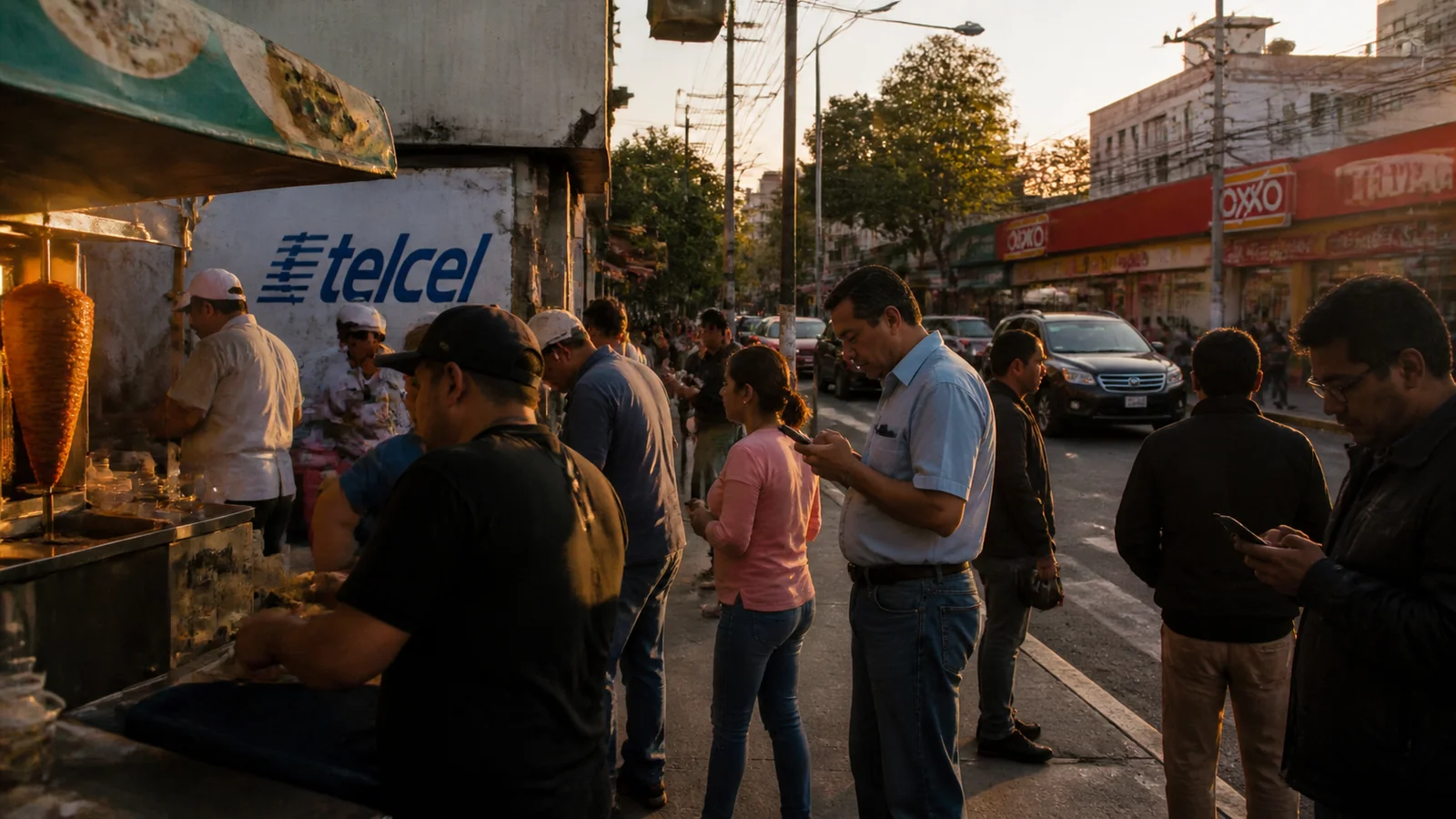
The only provider that publicly routes on Telcel’s AMX network.
Best pick for Yucatán archaeology trips, Oaxaca, Chiapas and Pacific coast road journeys
The only provider on our list that publicly routes on Telcel’s AMX network, the strongest rural carrier
Simple flat-rate pricing across the plan range
Heading to Mexico and want data the moment you land? This guide ranks eight travel eSIMs by price and, crucially, by which Mexican carrier each one routes through, because the gap between Telcel and the rest is the gap between staying online in rural Yucatán or not. It also covers how capped and “unlimited” plans really behave, the apps to install before you fly, and coverage from the Cancun resort strip out to the back roads.
02 Full comparison
All eight providers, side by side.
Every plan below was pulled from each provider’s own Mexico product page. These are data-only eSIMs, so none carry a Mexican number; keep your home SIM live for calls and 2FA. Each row lists the cheapest entry plan and the carrier behind it where the provider discloses one.
Special offer: Up to 59% off retail price on all Mexico plans Get it here
eSIMply
Cheapest unlimited Mexico eSIM, runs on Movistar.
4.7/5
★★★★★
Editor’s rating
Range
1GB to 20GB + Unlimited
Validity
3-30 days
Network
Movistar
Type
Data only
eSIMply routes its Mexico eSIM on Movistar, Mexico’s third-largest mobile carrier. Movistar is solid in CDMX, Guadalajara, Monterrey, the Riviera Maya resort strip, and most of the Bajio. The pricing is the most competitive unlimited bundle on our list: $3.95 for 1GB / 7 days, $11.95 for 5GB / 30 days, and $12.95 for unlimited data over 3 days. The unlimited 7-day plan at $23.95 is the cheapest week-long unlimited Mexico eSIM on our list, beating Nomad’s $38 / 7-day plan and Saily’s $48.99 / 15-day plan on a per-day basis. For travellers staying mainly in resort towns and major cities, eSIMply is the lowest-cost option on this guide.
Mexico plans
Plan
Validity
Price
Savings
1 GB
7 days
$2.95
Save $4.25 (59%)
2 GB
15 days
$4.95
Save $6.75 (58%)
3 GB
30 days
$6.95
Save $8.35 (55%)
5 GB Best value
30 days
$11.95
Save $11.45 (49%)
10 GB
30 days
$16.95
Save $16.35 (49%)
20 GB
30 days
$29.95
Save $25.85 (46%)
Unlimited
3 days
$12.95
Save $9.55 (42%)
Unlimited
5 days
$18.95
Save $13.45 (42%)
Unlimited
7 days
$23.95
Save $21.05 (47%)
Unlimited
10 days
$30.95
Save $26.65 (46%)
Unlimited
15 days
$56.95
Save $18.65 (25%)
Unlimited
30 days
$80.95
Save $25.25 (24%)
Installation
Buy online, get the QR code by email, and scan it into your settings before you fly; under two minutes. Set it as the active data line before boarding and it connects to Movistar Mexico the moment you land at Cancun, Mexico City or Guadalajara. No registration, no passport, no Telcel kiosk queue.
What works
Cheapest unlimited Mexico eSIM tested, from $12.95 for 3 days on Movistar
Auto-connects to Movistar the moment you land at CUN, MEX or GDL
No KYC, no ID, just buy and install
QR code emailed instantly after ordering, install in under 2 minutes
No hidden fees and 24/7 support by chat or email
Trade-offs
Movistar coverage is weaker than Telcel in rural Yucatán, Oaxaca and Chiapas, see our aloSIM pick if you’re spending most of the trip outside major cities
Data-only plan — no inbound voice calls or SMS on the eSIM line, keep your home SIM for voice
Get eSIM For Mexico →Prices shown in USD. Plans activate on first connection to a Mexican mobile network.
Airalo
Largest plan range, with the biggest fixed-bucket plan on our list.
4.5/5
★★★★★
Editor’s rating
Range
1GB to 50GB
Validity
3-30 days
Network
Movistar
Type
Data only
Airalo is the most-used travel eSIM provider globally, and their Mexico plans are competitive at the larger data tiers. Airalo’s Mexico product page lists Movistar as the primary network. The 50GB / 30-day plan at $45.00 is the largest fixed-bucket plan on our list. For travellers spending three to four weeks across CDMX, the Yucatán peninsula and Oaxaca who want a known data ceiling rather than an unlimited plan with throttling risk, the 20GB or 50GB packs from Airalo are the smartest buy. The trade-off: no unlimited Mexico plan, and the Movistar routing means rural Yucatán and the Oaxaca coast have weaker coverage than aloSIM’s Telcel routing.
Mexico plans
Plan
Validity
Price
1 GB
3 days
$4.00
3 GB
7 days
$8.50
5 GB
30 days
$13.00
10 GB
30 days
$18.50
20 GB Best value
30 days
$31.00
50 GB
30 days
$45.00
Installation
The Airalo app guides you through the install step by step. Available on iOS and Android. QR code install takes under two minutes. Airalo’s app shows remaining data usage in real time, useful when you’re tracking a 30-day plan from the road.
What works
Widest plan range on our list, 12 options from 1GB / 3 days up to 50GB / 30 days
50GB / 30 days at $45.00 is the largest fixed-bucket Mexico plan tested
Trade-offs
No unlimited Mexico plan, heavy streamers have to budget against the cap
Movistar routing is weak in rural Yucatán, Oaxaca and Chiapas, where Telcel dominates
Saily
NordVPN-backed brand with a competitive 30-day plan range.
4.2/5
★★★★★
Editor’s rating
Range
1GB to Unlimited
Validity
7-30 days
Network
Network not disclosed
Type
Data only
Saily is built by the team behind NordVPN, which gives it a trust signal that newer eSIM brands lack. For Mexico, their cheapest plan is 1GB / 7 days at $4.99 and the 5GB / 30-day plan at $16.99 is reasonable. Saily does not publicly name its Mexico carrier partner on its product page (it lists “best local network providers” without specifying), so the network you connect to is determined at purchase. The unlimited 15-day plan at $48.99 is the most expensive unlimited tier on our list.
Mexico plans
Plan
Validity
Price
1 GB
7 days
$4.99
3 GB
30 days
$11.99
5 GB Best value
30 days
$16.99
10 GB
30 days
$24.99
Unlimited
15 days
$48.99
Installation
QR code install via the Saily app or email. The app shows data usage in real time. Compatible with eSIM-capable iPhones and Android phones.
What works
NordVPN-backed brand carries strong trust signal for first-time eSIM buyers
Clean app with real-time data usage monitoring
Trade-offs
The Mexico carrier partner is not publicly disclosed, so coverage outside major cities is unpredictable
Unlimited 15-day plan at $48.99 is by far the most expensive unlimited Mexico bundle on our list
Nomad
Heavy-data plans on an AT&T Mexico / Movistar pool, unlimited from $18.
4.4/5
★★★★★
Editor’s rating
Range
1GB to 50GB + Unlimited
Validity
3-30 days
Network
AT&T · Movistar
Type
Data only
Nomad’s Mexico product page lists the network as AT&T Mexico and Movistar, the only multi-network pool publicly disclosed by any provider on this list. AT&T Mexico (formerly Iusacell/Nextel) covers urban centres and the resort strip well, and the dual-carrier failover means that if one network drops you’ll latch onto the other automatically. Pricing is mid-tier: 1GB / 7 days at $4.50, 5GB / 30 days at $15.00, and a 50GB / 30-day plan at $79.00 for genuinely heavy users. Nomad’s unlimited Mexico plans start at $18 / 3 days and run to $48 / 10 days, useful for digital nomad sprints.
Mexico plans
Plan
Validity
Price
1 GB
7 days
$4.50
3 GB
30 days
$9.50
10 GB Best value
30 days
$21.00
20 GB
30 days
$35.00
50 GB
30 days
$79.00
Unlimited
3 days
$18.00
Unlimited
7 days
$38.00
Unlimited
10 days
$48.00
Installation
Standard QR code install. The Nomad app (iOS and Android) shows your live data balance and remaining days. If you’re on a 30-day plan and approaching the end, the app notifies you. Nomad does not auto-renew, so set a calendar reminder before your plan expires.
!
Worth knowing
Nomad doesn’t auto-renew. If your stay runs longer than your plan, you’ll need to purchase a fresh plan manually. The app makes this easy, but it’s worth knowing in advance.
What works
Only Mexico eSIM on our list with two disclosed carriers (AT&T Mexico + Movistar) for natural failover
Genuine unlimited Mexico plans from $18 / 3 days for digital nomad sprints
Trade-offs
50GB / 30 days at $79 is significantly more expensive than Airalo’s 50GB at $45
Neither AT&T Mexico nor Movistar matches Telcel’s coverage in rural Yucatán or Oaxaca
Jetpac
Decent short-trip plans, but the carrier partner is not disclosed.
3.9/5
★★★★★
Editor’s rating
Range
1GB to 30GB
Validity
4-30 days
Network
Network not disclosed
Type
Data only
Jetpac’s pricing for Mexico is competitive at the bottom of the range, with a 1GB / 4-day plan at $5.00 and a 5GB / 30-day plan at $14.00 that reads as a sensible short-trip choice. The 30GB / 30-day plan at $49.99 is a strange standout, it actually undercuts Jetpac’s own 20GB / 30-day plan at $60.00, so always check that you’re paying the lower of the two if you need the larger bucket. Jetpac’s Mexico product page mentions “multi-network support” but does not name a specific carrier, so coverage outside major cities is the gamble.
Mexico plans
Plan
Validity
Price
1 GB
4 days
$5.00
3 GB
7 days
$10.00
5 GB Best value
30 days
$14.00
10 GB
30 days
$24.99
30 GB
30 days
$49.99
What works
5GB / 30 days at $14.00 is a sensible short-trip price for casual users
30GB / 30 days at $49.99 is reasonable for a medium-data four-week stay
Trade-offs
The Mexico carrier is not publicly disclosed, so coverage in rural areas is unpredictable
20GB / 30-day plan at $60 is priced higher than the 30GB plan, watch what you click on
aloSIM
The only provider on our list that publicly routes on Telcel’s AMX network.
4.3/5
★★★★★
Editor’s rating
Range
1GB to 20GB
Validity
7-30 days
Network
Telcel (AMX)
Type
Data only
aloSIM’s Mexico product page lists the network as “CLARO – AMX Group”, AMX being América Móvil, parent of Telcel (Mexico’s dominant carrier). For travellers spending most of the trip outside major cities (the Yucatán archaeology circuit, Oaxaca’s Pacific coast, Chiapas, the Sierra Madre, Pueblos Mágicos road trips), this matters more than price. Telcel is the only Mexican carrier with reliable rural coverage, and aloSIM is the only provider on our list that publicly discloses routing through it. Pricing is mid-tier, the 5GB / 30-day plan at $21.00 is more expensive than eSIMply ($11.95) but you’re paying for the network advantage in places where the cheaper Movistar-routed plans simply won’t connect.
Mexico plans
Plan
Validity
Price
1 GB
7 days
$6.00
2 GB
15 days
$11.50
3 GB Best value
30 days
$15.00
10 GB
30 days
$36.00
20 GB
30 days
$60.00
What works
The only provider on our list that publicly routes on Telcel’s AMX network, the strongest rural carrier
Best pick for Yucatán archaeology trips, Oaxaca, Chiapas and Pacific coast road journeys
Trade-offs
Pricing is significantly higher than eSIMply or Roamless on the same data tier
No unlimited option, so heavy streamers need to budget against a 20GB cap
Roamless
Aggressive pricing on 30-day capped plans, no carrier disclosed.
3.9/5
★★★★★
Editor’s rating
Range
1GB to 20GB
Validity
30 days only
Network
Network not disclosed
Type
Data only
Roamless prices its Mexico plans aggressively. 1GB / 30 days at $4.45 is the cheapest 30-day entry plan on our list. 5GB / 30 days at $15.95 and 10GB / 30 days at $22.95 are competitive too. The trade-off is the validity window, every Roamless plan is fixed at 30 days, so there’s no short-trip option for a long weekend in Cancun. The bigger trade-off: Roamless does not name a Mexico carrier on its product page, so coverage outside CDMX, Cancun and the major resort strips is unpredictable.
Mexico plans
Plan
Validity
Price
1 GB
30 days
$4.45
3 GB
30 days
$10.45
5 GB Best value
30 days
$15.95
10 GB
30 days
$22.95
20 GB
30 days
$38.95
What works
Cheapest 1GB / 30-day plan on our list at $4.45
Flat 30-day validity is enough buffer for most longer Mexico trips
Trade-offs
No short-validity plans, pointless for trips under two weeks
The Mexico carrier is not publicly disclosed, so rural coverage is a gamble
GigSky
Long-validity plans (up to 180 days), but expensive overall.
3.5/5
★★★★★
Editor’s rating
Range
1GB to 100GB
Validity
7-180 days
Network
Network not disclosed
Type
Data only
GigSky is the most expensive provider on our Mexico list. 5GB / 30 days runs $24.64, more than double what eSIMply charges for the same bucket. The one situation where GigSky makes sense is for travellers who genuinely need a 90-day or 180-day validity window without rebuying, expat trial stays, six-month sabbaticals, snowbird seasons in San Miguel de Allende. Their 100GB / 180-day plan at $178.07 sits in a category no other provider on our list serves. For everyone else, the pricing on the smaller plans makes GigSky hard to recommend.
Mexico plans
Plan
Validity
Price
1 GB
7 days
$6.99
3 GB
15 days
$14.87
5 GB
30 days
$24.64
50 GB Best value
90 days
$118.57
100 GB
180 days
$178.07
What works
Only provider on our list offering 90-day and 180-day validity windows for Mexico
Useful for snowbird stays, sabbaticals and long expat trial periods
Trade-offs
By far the most expensive small and medium Mexico plans on our list
No unlimited Mexico plan option, and the carrier partner is not disclosed
07 Country essentials
Before you go to Mexico.
Mexico is two countries layered on top of each other: a card-friendly resort grid stretching across Cancun, CDMX, Los Cabos and the Riviera Maya, and a cash-only, Telcel-only Mexico everywhere else. The moment you cross between them without warning is when first-timers get stung. Transport, payments, and the underlying mobile network matter more here than in almost any other big tourist country, and these are the things to settle before you fly.
The eSIM gotcha
The wrong network can leave you offline outside the resort grid.
An eSIM that routes on Movistar will look fine in CDMX and the Cancun Hotel Zone and die in rural Yucatán, Oaxaca and Chiapas, where only Telcel has reliable rural coverage and AT&T Mexico is a distant second. Buying the cheapest eSIM without checking the host network is the single most common Mexico data mistake. If your itinerary leaves the major cities, prioritise a Telcel-routed eSIM (aloSIM is the only one in this guide that publicly discloses Telcel) over the cheapest plan you can find.
WhatsApp is the operating system of Mexican commerce.
Booking a tour in Tulum, asking a casita owner about check-in, or chasing a lost Rappi order, all of it happens on WhatsApp, not email. Around 92% of Mexicans use WhatsApp and the country averages over 18 hours of WhatsApp use per person per month, which is why hotels print WhatsApp numbers on business cards and small businesses ignore email entirely. If your eSIM gives you data the moment you land, you can use WhatsApp normally; if you’re still on roaming-off airplane mode at the kerb, you can’t message the driver your resort booked, you can’t confirm a tour reschedule, and you can’t replace the SMS verification codes some Mexican services still send. This is the single biggest reason “I’ll just sort connectivity later” backfires here.
Always tap “pesos” at every ATM and card terminal.
Install Uber and DiDi before you fly, request from both, take the cheaper quote. In CDMX, the Metro is genuinely one of the cheapest big-city subways on earth at 5 pesos a ride, but you need a Tarjeta de Movilidad Integrada to tap in.
$
Paying for things
Cards work in chains and resort zones. Everywhere else is pesos cash. Always tap MXN at the terminal (never your home currency) and use ATMs inside bank branches, not standalone tourist-zone machines.
For money: Mexico is still a cash economy underneath the card-friendly resort layer. Roughly 66% of all retail and e-commerce payment value in 2022 was settled in cash, against 27% by card and only 7% digital, and less than half the population holds a bank account. In Cancun’s Hotel Zone, Polanco or Los Cabos resorts you can swipe Visa or Mastercard for almost everything; at a Yucatán cenote, an Oaxacan mole stand or a CDMX street taco, plan to pay in pesos and carry small bills, vendors hate breaking 500-peso notes and the ATM will hand them to you anyway, so split big notes at OXXO or your hotel front desk early. Locals increasingly skip cards entirely and bank-transfer each other via SPEI, SPEI processed over 5.4 billion operations in 2024, growing roughly 39% year on year. As a tourist you can’t tap into SPEI without a Mexican CLABE bank account; keep pesos cash for street vendors, a Visa/Mastercard for hotels and chains, and forget CoDi exists.
Apps to install before you leave.
These are the apps Reddit travellers and Mexicans themselves consistently say first-timers wish they’d downloaded before landing, not the ones in generic packing lists, but the ones that actually matter once you’re navigating an unfamiliar Mexican city on mobile data.
10-15% is the baseline at restaurants, rising to 15-20% in tourist areas like Cancun, Playa del Carmen and Puerto Vallarta. Always scan the bill for a “propina” or “servicio” line first. Tip in cash directly to the server. Beyond restaurants: 5-10 pesos per bag for supermarket cerillitos (the teenage baggers earn nothing but tips), 10-20 pesos for hotel bag handlers and housekeeping per day, and round up DiDi/Uber fares.
$
Cash vs card
Keep 500-1,000 pesos in cash at all times outside resort zones. Cards work in chains, malls and hotels. Yucatán cenotes, Oaxacan markets, CDMX street tacos and most family-run cantinas are pesos-cash only. Use ATMs inside major bank branches (BBVA, Santander, Banamex) and always tap MXN, never your home currency.
Where you’ll actually use your eSIM in Mexico.
Six destinations where your mobile data will earn its keep, and where the coverage differences between Mexican carriers actually matter:
01 Mexico City (CDMX)
All three major networks deliver 4G/5G everywhere above ground. The Metro is the only patchy zone. Telcel and AT&T Mexico are the strongest performers; Movistar holds up well across Roma, Condesa, Polanco and the Centro Histórico. You’ll lean heavily on Uber, DiDi, Rappi and Google Maps live transit.
02 Cancun and the Riviera Maya
Telcel and AT&T Mexico are both solid in Cancun, Playa del Carmen and Tulum resort zones. You’ll need data the second you land at CUN to call your hotel transfer or message ADO bus pickup points, Uber doesn’t pick up airport-side. Coverage thins on backroads between Tulum and Bacalar.
03 Guadalajara and Puebla
Uber, DiDi and Cabify all work well across both cities. Coverage is uniform on all three networks across the urban core. Guadalajara’s tech corridor and Puebla’s Centro Histórico both have reliable 4G/5G; data dies briefly on the libre roads heading out toward Tequila or Cholula.
04 Mérida, Yucatán and the archaeology circuit
Across Mexico, Telcel is the only carrier that holds up consistently between archaeology sites (Chichén Itzá, Uxmal, Valladolid). AT&T Mexico drops out on the libre roads. If your trip leaves Mérida, Yucatán for cenotes, ruins or Pueblos Mágicos like Izamal, an aloSIM (Telcel) plan is the safer pick than the cheaper Movistar-routed alternatives, and you’ll have a reliable connection across the whole peninsula’s mobile broadband infrastructure.
05 Oaxaca and the Pacific coast
Telcel coverage exists in Oaxaca City and the main beach towns (Puerto Escondido, Mazunte) but expect dead patches on the windy mountain roads in and out, especially the eight-hour drive from the city to the coast. Pre-download maps and offline content before leaving Oaxaca.
06 Los Cabos
All networks fine in town, San José del Cabo and Cabo San Lucas both have full 4G/5G coverage on Telcel and AT&T. Telcel still wins on the East Cape dirt roads, beach access points, and the Sierra de la Laguna trails. Movistar starts to drop somewhere past Los Barriles.
08 Decision guide
How to choose the best eSIM for Mexico.
Choosing a Mexico eSIM really turns on four things, and here the order is different: which carrier the plan rides comes first, then how much data you use in a day, whether capped or unlimited suits you, and whether a country plan beats a regional one. Carrier leads because the Telcel-versus-the-rest coverage gap decides whether you stay online once you leave the resort strip. Our broader guide to choosing an eSIM plan covers the same ground for any country; below it is tuned for Mexico.
1. Which Mexican carrier does each eSIM use?
Mexico has three main mobile carriers: Telcel (América Móvil, the dominant ~65% market-share carrier with the strongest rural and coastal coverage), AT&T Mexico (formerly Iusacell/Nextel, strong in urban centres and the resort strip but thinning out in rural Yucatán and Chiapas), and Movistar (Telefónica, third place with weakest rural coverage). Disclosure varies by provider. eSIMply and Airalo route on Movistar. Nomad publicly discloses an AT&T Mexico / Movistar pool, the only multi-network combo named. aloSIM is the only provider on this list that publicly routes on Telcel (its product page lists “CLARO – AMX Group”, AMX being parent of Telcel). Saily, Jetpac, Roamless and GigSky do not publicly name their Mexican carrier partner on their product pages. If your itinerary leaves the major cities, prioritise a Telcel-routed eSIM over the cheapest plan you can find.
2. How much daily data do you actually need?
Most Mexico travellers use 1-2GB of data per day for standard usage: Google Maps navigation, messaging on WhatsApp, Instagram browsing, the occasional photo upload, plus a steady drip of DiDi/Uber requests. Remote workers on video calls or travellers uploading large photo files need 3-5GB per day. Common mistake: buying a 1GB plan for a 7-day Mexico trip thinking it’ll be enough, then running out by day four because WhatsApp alone is 100-150MB per day if you’re coordinating with hosts and tour operators. For a one-week Mexico trip, a 10GB plan covers most travellers with room to spare. Two weeks: 15-20GB. Longer stays or remote work: anchor on Nomad’s 50GB plan or eSIMply’s unlimited.
3. Capped data plan or unlimited?
For Mexico specifically, a capped data plan often outperforms unlimited in real-world use. “Unlimited” Mexico plans are typically subject to fair-use throttling on the underlying carrier network, which is hardest to predict in dense tourist zones (Cancun’s Hotel Zone, Playa Centro, Tulum beach road) during peak evening hours. A 10GB or 20GB capped plan runs at full speed until the cap, then stops cleanly. If your trip involves heavy evening usage in resort areas, capped beats unlimited. Unlimited is worth the trade-off only if you’re a remote worker who needs data throughout the day and can accept occasional slowdowns after dark.
4. Should you get a Mexico-specific eSIM or a regional Americas plan?
If Mexico is your only destination, a Mexico-specific eSIM is 30-40% cheaper than equivalent regional plans. The pricing difference comes from regional plans building in coverage across 20-30 countries, most of which you’ll never use. A global eSIM or regional Americas plan makes sense when your trip combines Mexico with the United States, Canada, Belize, Guatemala or Costa Rica, two or more countries tips the calculation in favour of regional. Three or more countries, regional always wins. For a Mexico-only trip, buy a country-specific eSIM. Any reputable eSIM service will let you pick country-specific or regional, compare both before you commit.
i
Quick tip
Install your Mexico eSIM before you board and set it as your default data line. Turn off data roaming on your home SIM to avoid surprise roaming charges. When the plane lands at CUN, MEX, GDL or BJX, your eSIM connects to its underlying Mexican carrier automatically, you’ll have data within seconds of touching down. That matters here: the moment you land, you can request a DiDi to your Airbnb or message your hotel transfer driver on WhatsApp without queueing for a Telcel kiosk or paying for airport Wi-Fi.
09 Frequently asked
Best eSIM for Mexico: FAQs.
For tourists with eSIM-compatible phones, the best option is a travel eSIM you install before flying, no queuing at the airport, no passport registration at the Telcel counter, and cheaper than the tourist SIM cards sold at Cancun or Mexico City arrivals. The cheapest Mexico eSIM we found is eSIMply at $3.95 for 1GB / 7 days on Movistar, with unlimited plans starting at $12.95 for 3 days. For travellers spending most of the trip in rural Yucatán, Oaxaca or Chiapas, aloSIM is the only provider on this list that publicly routes on Telcel’s AMX network, the strongest rural carrier. If you prefer a physical SIM card, Telcel and AT&T Mexico sell tourist SIM packages at major airports, but you’ll queue 20-40 minutes during peak arrivals. The eSIM equivalent costs less and activates faster.
Yes, Airalo is a reliable choice for Mexico and one of the most-used eSIM providers globally. Airalo’s Mexico product page lists Movistar as the primary network, and the plan range is the widest on our list, 12 options from 1GB / 3 days to 50GB / 30 days, which suits trips of any length. The 50GB / 30-day plan at $45.00 is the largest fixed-bucket Mexico plan on our list. The main limitations: Airalo doesn’t offer unlimited data plans for Mexico, and Movistar’s coverage is weaker than Telcel in rural Yucatán, Oaxaca and Chiapas. For most tourists spending a week or two in CDMX, Cancun or the Riviera Maya, the 5GB / 30-day plan at $13.00 or 10GB / 30 days at $18.50 are solid, well-priced eSIM options.
For short trips and travellers staying mainly in CDMX, Cancun and the Riviera Maya, eSIMply is better value than Airalo. eSIMply’s 5GB / 30-day plan at $11.95 undercuts Airalo’s $13.00 equivalent, and eSIMply adds unlimited Mexico plans (from $12.95 for 3 days) that Airalo doesn’t offer at all. For travellers prioritising rural coverage, aloSIM is the only provider on our list that publicly routes on Telcel, Mexico’s strongest rural network, which matters in Yucatán, Oaxaca and Chiapas. Airalo is still the better pick if you want the widest plan choice in one place, or if you’re booking eSIMs across multiple countries on the same Airalo account.
Most travellers use 1-2GB of mobile data per day in Mexico for standard usage: Google Maps, WhatsApp messaging with hosts and tour operators, Instagram browsing, occasional photo uploads, and a steady drip of DiDi/Uber requests. Heavy users (video calls, cloud photo backups, frequent streaming) should budget 3-5GB per day. Practical benchmark: for a 7-day Mexico trip with average usage, a 10GB plan is comfortable. For two weeks, 15-20GB. For longer stays or remote work, Nomad’s 50GB / 30-day plan at $79 or eSIMply’s unlimited tiers (from $30.95 for 10 days) are better anchors. One note: WhatsApp video calls and Google Maps satellite mode burn through data fast, switch to standard map view and audio-only WhatsApp where possible to save mobile data.
5G is rolling out across CDMX, Guadalajara, Monterrey and parts of the Riviera Maya on Telcel and AT&T Mexico, but most travel eSIMs are 4G LTE only. Of the providers on this list, only Nomad explicitly claims 5G availability on its Mexico product page. Whether a given provider’s Mexico plan delivers GB of high-speed data on 5G depends on the underlying carrier deal, so check the provider’s product page before purchase. For most tourist use (Maps, messaging, social media, video calls, HD streaming) 4G LTE covers every scenario. 5G matters mainly if you’re moving large files or doing heavy cloud backups, common for digital nomad workloads.
You can buy a physical Telcel or AT&T Mexico SIM at the major airports (CUN, MEX, AIFA, GDL), but the queues run 20-40 minutes during peak arrivals and packages typically run 200-400 pesos for limited validity. A travel eSIM you’ve purchased online and installed before flying is faster, cheaper, and activates automatically when you land, particularly important at Cancun where Uber and DiDi are banned from airport pickups, so you’ll need data immediately to message a pre-booked transfer or buy your ADO bus ticket. If you’ve forgotten to get an eSIM before flying, eSIMply, Airalo and Saily all sell plans you can purchase and install at the airport using the existing airport Wi-Fi, it takes about 2 minutes.
Yes, and you should. Most modern phones support dual SIM (one physical SIM plus one eSIM). The correct setup for Mexico travel: keep your home carrier SIM active for calls on your local phone number, WhatsApp number verification, and 2FA texts; use the eSIM for all data. Set the eSIM as your default data line in your phone’s settings and turn off data roaming on your home SIM, this prevents your home carrier from automatically connecting to a Mexican network and racking up international roaming charges. On iPhone: Settings → Cellular → Cellular Data → choose your Mexico eSIM. On Android (Pixel, Samsung, OnePlus and most others): Settings → SIM card manager → set the default eSIM for mobile data.
Getting an eSIM for a trip to Mexico takes about 5 minutes from any smartphone that supports eSIMs. Pick a prepaid eSIM plan from one of the providers in our comparison (eSIMply, Airalo, Nomad, aloSIM and Saily are all reliable eSIM options for Mexico). Pay online, and you’ll receive a QR code by email within seconds, this is the advantage of eSIM technology over a physical SIM card. To install an eSIM: go to Settings on your phone, find the “Add eSIM” or “Add Mobile Plan” option, scan the QR code, and follow the activation prompts. The whole process takes 2-3 minutes. Activate your eSIM at home before you fly, you don’t need to be in Mexico for setup. When you land and turn on mobile data, your phone connects to the local carrier and you have a fast internet connection within seconds, no roaming fees, no swapping out a physical SIM card. The eSIM’s profile sits alongside your home SIM. Using the eSIM alongside your home SIM works simultaneously: keep your home telephone line for calls and SMS text messages on your usual telephone number, use the Mexico eSIM whenever you need internet access or want to use the internet for data-heavy tasks like Maps, photo backup, and WhatsApp video calls. Most providers also let you reinstall the same eSIM later, manage your eSIMs across multiple trips through their mobile app, and contact the support team via online chat if anything goes wrong. Buying your first eSIM for Mexico? eSIMply’s customer support team can walk you through activation by email or chat 24/7. Land in Mexico and enjoy a connected trip from the moment your taxi pulls away from the kerb, no airport-Wi-Fi scramble, no time in Mexico lost to a Telcel kiosk queue.
Yes, Wi-Fi hotspot and tethering are supported by all the eSIM providers on our list (eSIMply, Airalo, Saily, Nomad, Jetpac, aloSIM, Roamless, GigSky). You can share your internet access with a laptop, tablet, or a travel companion’s mobile phone without any additional charge. The hotspot function works exactly like your home carrier’s personal hotspot: enable it in Settings on your smartphone, connect your other device to the Wi-Fi network it creates. The eSIM keeps you connected and gives you a reliable connection anywhere your underlying Mexican carrier has signal, including on 4G and 5G in CDMX, Cancun and Guadalajara. One caveat: hotspot use burns through your data packs faster than device-only use, add 30-50% to your expected daily usage if you plan to tether regularly. For two-week trips with regular hotspot use, a 20GB plan or Nomad’s 50GB option is more comfortable than a 10GB plan, a useful eSIM for mobile broadband on the go and digital nomads working from cafes in CDMX or Playa del Carmen.
If you run out of data, your connection stops (on capped plans) or slows significantly (on plans where the provider offers unlimited data with fair-use throttling). The fastest fix is to add data plan refills or top-ups from the same provider’s app, most providers let you buy a new eSIM bolt-on without scanning a new QR code. Airalo and Nomad both have in-app top-up. eSIMply lets you add a new plan to your existing eSIM from the website and gives you instant access to your eSIM immediately. If you genuinely need to stay connected and stay in touch with hosts or transfer drivers while sorting a plan, most shopping malls, Starbucks and OXXO stores offer free Wi-Fi. As a backup, Telcel SIM cards are available at any OXXO store nationwide for around 150 pesos including starting credit, useful if your eSIM runs out mid-trip and you can’t top up immediately. Plenty of US carriers (T-Mobile, AT&T, Verizon) also offer Mexico roaming plans built into their domestic packages, but these are typically more expensive than a Mexico-specific eSIM. (For travellers visiting more than one country including Mexico on the same trip, see our regional and destination-specific guides covering USA and Argentina. Mexico is one of the easiest places to use an eSIM if you pick the right network for your itinerary.)
Our methodology
How we evaluated these Mexico eSIMs.
eSIMply is our own eSIM business, and one of the eight plans here is ours; we have written up the rest the way we would want a competitor to write about us. Every claim traces back to a primary source: the provider’s own product page, the underlying Mexican carrier (Telcel via América Móvil, AT&T Mexico, or Movistar), or the GSMA‘s eSIM specification.
For every eSIM provider we list, we identify the underlying carrier network they actually route traffic through in Mexico (Telcel/AMX, AT&T Mexico, or Movistar), that is what determines real-world speed and coverage, not the brand on the front of the eSIM
Networks were verified per provider against each one’s public Mexico product page; where a provider does not publicly disclose its Mexican carrier partner, we say so explicitly rather than guess
We compare pricing across the entire plan range, plan flexibility, validity windows, hotspot/tethering allowances, and the published fair-use throttling behaviour on plans marketed as offering unlimited data
Where two eSIM providers offer plans on the same network, we rank by price, customer support, install experience, and whether the eSIM with unlimited data option is genuinely uncapped or fair-use throttled
Providers we considered but excluded: the Holafly eSIM for Mexico (no capped data plans, only daily unlimited), Ubigi (less competitive Mexico-specific plans than the eight on this list), and eSIM4 (excluded by editorial policy)
We also note which providers’ apps support eSIMs natively, expose a support team via online chat, and let you reinstall an existing profile if you change handset, the kind of infrastructure information that matters more than a marketing tagline
We may earn a small commission if you buy through a link here. It does not change the order, and a weak provider stays off the list whatever the terms.
Jamie Cole
Tech content writer · eSIMply.co
Jamie has worked in telecommunications for more than 8 years across mobile, SMS, eSIM, apps, and adjacent technology. He now writes for eSIMply as the tech content writer, analysing the top eSIM providers and breaking down what travellers actually need to know.
While we do our best to ensure accuracy, prices and plan availability are subject to change. Last updated by Jamie Cole.
To provide the best experiences, we use technologies like cookies to store and/or access device information. Consenting to these technologies will allow us to process data such as browsing behavior or unique IDs on this site. Not consenting or withdrawing consent, may adversely affect certain features and functions.
Functional
Always active
The technical storage or access is strictly necessary for the legitimate purpose of enabling the use of a specific service explicitly requested by the subscriber or user, or for the sole purpose of carrying out the transmission of a communication over an electronic communications network.
Preferences
The technical storage or access is necessary for the legitimate purpose of storing preferences that are not requested by the subscriber or user.
Statistics
The technical storage or access that is used exclusively for statistical purposes.The technical storage or access that is used exclusively for anonymous statistical purposes. Without a subpoena, voluntary compliance on the part of your Internet Service Provider, or additional records from a third party, information stored or retrieved for this purpose alone cannot usually be used to identify you.
Marketing
The technical storage or access is required to create user profiles to send advertising, or to track the user on a website or across several websites for similar marketing purposes.